

 English
 中文简体
中文简体 русский
 Deutsch
Content
- 1 The Industrial Logic Behind Aluminum Wire's Dominance
- 2 How Alloy Chemistry Shapes the Aluminum Wire Property Spectrum
- 3 Fine Aluminum Wire: Production Challenges and Application Requirements
- 4 Emerging Demand: Electric Vehicles and Grid Infrastructure as Specification Drivers
- 5 Procurement Criteria That Predict Real-World Wire Performance
The Industrial Logic Behind Aluminum Wire's Dominance
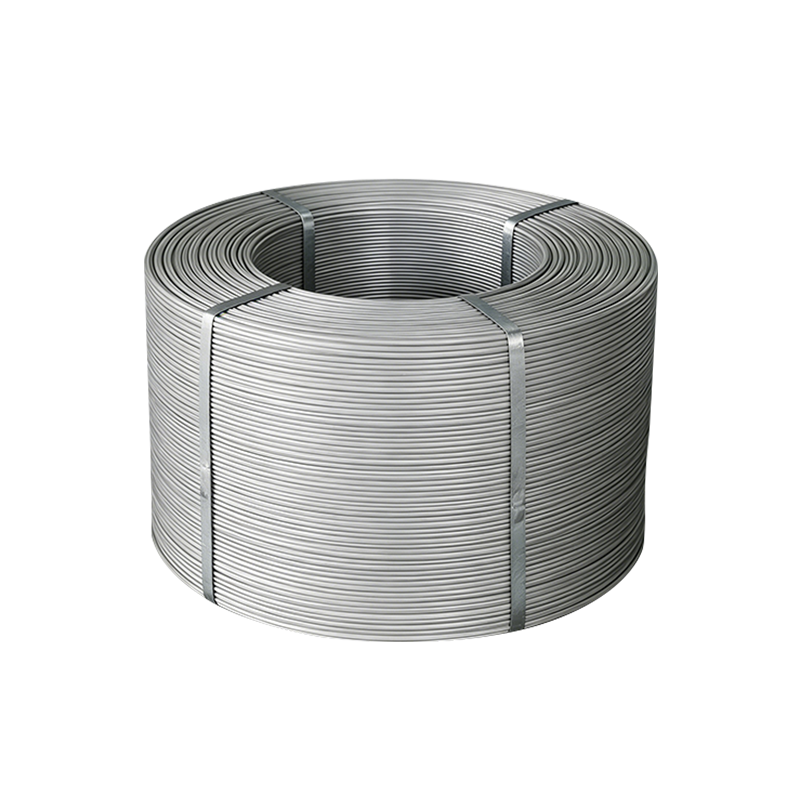
Aluminum wire has become the default material in a widening range of industrial applications not because it is the best conductor or the strongest wire available, but because it consistently delivers the most favorable combination of electrical performance, mechanical properties, weight, and cost for the majority of real-world engineering constraints. At 2.70 g/cm³ — one-third the density of copper — aluminum wire achieves equivalent current-carrying capacity at roughly half the mass of a copper conductor, while costing approximately one-third as much per kilogram. For long-run applications, large-scale winding operations, and any system where weight is a design variable, these numbers are structurally decisive.
What has changed over the past two decades is the sophistication of how aluminum wire is produced and specified. Early aluminum wiring earned reliability problems primarily from inadequate connector engineering and poorly understood thermal expansion behavior at terminations — issues solved by modern alloy development, surface treatment, and hardware design rather than by any fundamental limitation of aluminum as a conductor material. Today's aluminum wire spans a property range that was previously achievable only across multiple material families: from ultra-high-purity 5N grades for semiconductor bonding wire, through electrical-grade 1350-H19 for overhead transmission, to high-strength 7xxx alloy wire for aerospace structural cable, all within the same base metal system.
How Alloy Chemistry Shapes the Aluminum Wire Property Spectrum
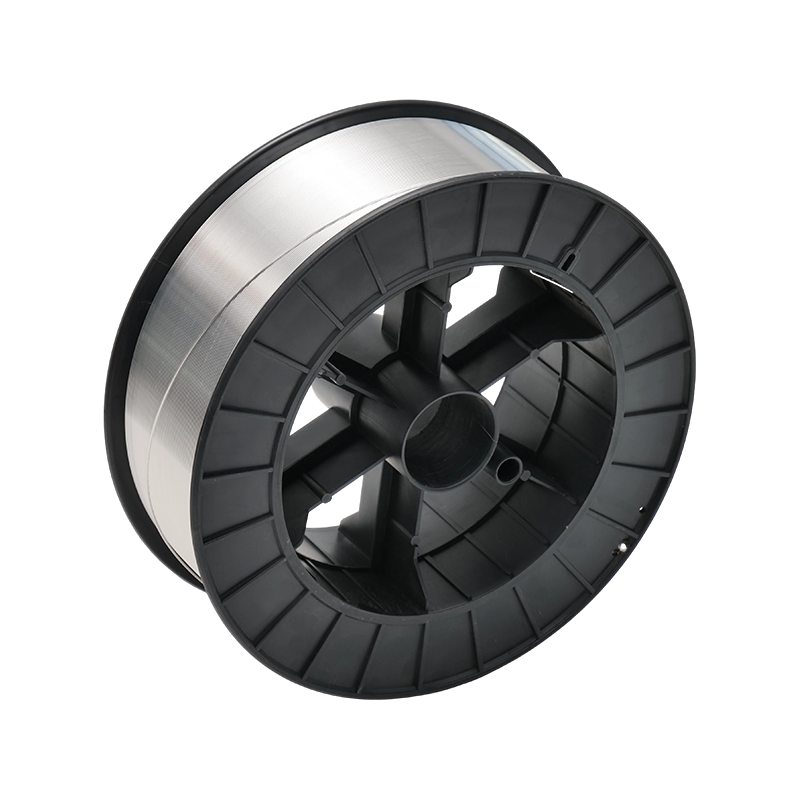
The distinction between commercially pure aluminum wire and aluminum alloy wire is not merely compositional — it represents a fundamental shift in which properties the material prioritizes. Pure 1xxx-series wire maximizes electrical conductivity (61–64% IACS) and ductility at the expense of mechanical strength, with tensile values typically below 185 MPa even in fully work-hardened H19 temper. Aluminum alloy wire introduces controlled additions of magnesium, silicon, copper, zinc, or zirconium to access strengthening mechanisms unavailable to pure aluminum: solid solution hardening, precipitation hardening, and dispersoid formation. Each mechanism delivers strength increments with a predictable conductivity penalty, enabling engineers to select along a continuous tradeoff curve rather than choose between two discrete options.
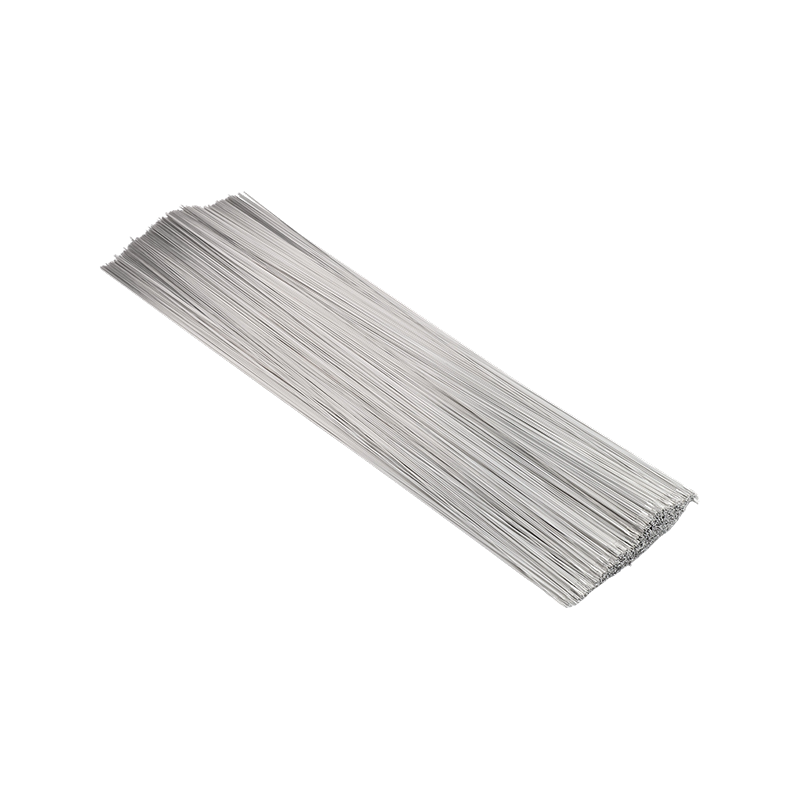
The 6xxx series (Al-Mg-Si) represents the most commercially significant zone of this tradeoff. Alloy 6201-T81 achieves 315 MPa tensile strength at 52.5% IACS conductivity — sufficient for All-Aluminum Alloy Conductor (AAAC) overhead lines that match steel-reinforced ACSR sag performance at reduced weight and superior corrosion resistance. The 5xxx series (Al-Mg) provides the highest strength among non-heat-treatable alloys, with excellent marine corrosion resistance that makes 5356 and 5056 the standard choices for welding wire and rivet wire in saltwater environments. At the extreme end, 7xxx alloys reach 500–570 MPa tensile strength — approaching medium-carbon steel territory — at the cost of conductivity reduced to 33–45% IACS, which confines their use to structural and aerospace applications where electrical performance is irrelevant.
| Series | Primary Alloying Element | Tensile Range (MPa) | Conductivity (% IACS) | Representative Wire Use |
|---|---|---|---|---|
| 1xxx | None (≥99% Al) | 60–185 | 61–64 | Transformer winding, bonding wire, AAC conductor |
| 5xxx | Magnesium | 190–310 | 27–35 | Welding filler, rivet wire, marine structures |
| 6xxx | Magnesium + Silicon | 200–315 | 43–58 | AAAC conductor, automotive wiring harness |
| 7xxx | Zinc | 400–570 | 33–45 | Aerospace structural cable, high-load assemblies |
Fine Aluminum Wire: Production Challenges and Application Requirements
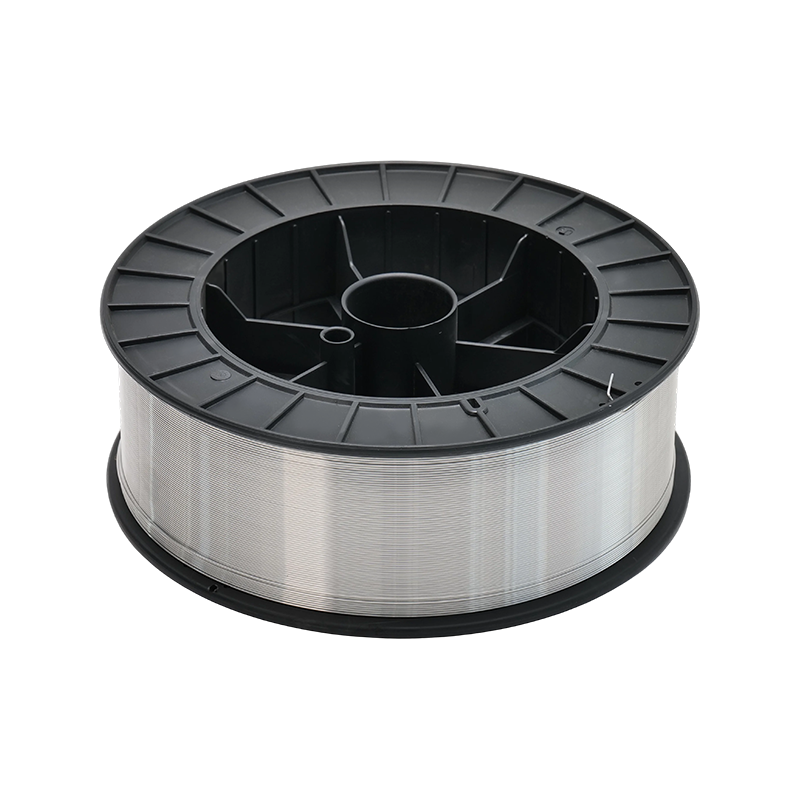
Fine aluminum wire — generally understood as wire below 0.5 mm diameter, with ultra-fine grades extending below 0.05 mm — occupies a technically demanding segment of the wire market where the production challenges are qualitatively different from those of standard gauge wire. At fine diameters, the ratio of surface area to cross-sectional area increases dramatically, meaning that surface defects, oxide layer non-uniformity, and drawing lubricant residues that are inconsequential at 2 mm diameter become dominant variables at 0.1 mm. A single inclusion or surface seam that would cause no measurable effect in a structural conductor will cause a wire break in a fine bonding wire draw, interrupting production and introducing a potential weak point in the finished coil.
The drawing process for fine aluminum wire requires die geometries, lubricant systems, and draw speed profiles optimized specifically for the alloy and target diameter. Reduction ratios per pass must be controlled to prevent adiabatic heating at the die contact zone — localized temperature rises that cause surface oxidation and compromise surface quality before the wire reaches its final dimension. Intermediate annealing cycles are more frequent than for standard wire, and the annealing atmosphere must be controlled to prevent hydrogen uptake and excessive oxide growth that would affect surface chemistry at the scale relevant to bonding and contact applications.
Semiconductor bonding wire is the most specification-intensive application for fine aluminum wire. Bonding wire in the 17–500 µm diameter range must meet simultaneous requirements for electrical resistivity, bond formation kinetics, loop geometry stability, and joint reliability through thousands of thermal cycles between −55°C and 150°C. At these dimensions, grain structure has a direct and measurable effect on loop formation during wire bonding — too few grains across the wire cross-section produces erratic loop behavior; excessive grain growth from over-annealing reduces fatigue resistance at the bond neck. Purity at the 4N (99.99%) level is standard for bonding wire applications, as Fe and Si impurities at even 100–200 ppm concentrations affect both electrical resistivity and bonding metallurgy in ways that are unacceptable for high-reliability semiconductor packages.
Beyond semiconductors, fine aluminum wire serves sensor winding, precision instrument manufacturing, high-frequency transformer coils, and medical device assembly — each with distinct requirements around surface cleanliness, temper consistency, and packaging geometry. For automated winding equipment operating at high speeds, tension variation along the wire length caused by diameter fluctuation or inconsistent annealing is a more immediately damaging quality issue than average mechanical properties, because it manifests as winding register error or wire breakage that stops production.
Emerging Demand: Electric Vehicles and Grid Infrastructure as Specification Drivers
Two infrastructure transitions are reshaping aluminum wire demand and pulling wire specifications toward tighter tolerances, better documentation, and broader alloy diversity. Electric vehicle platform development is driving the most immediate change. As automotive OEMs and Tier 1 suppliers replace copper wiring harness segments with aluminum equivalents — achieving 40–50% mass reduction on high-voltage bus conductors at equivalent current capacity — the supply chain is absorbing specifications it has not previously qualified at scale: flex cycle fatigue life over 15-year vehicle lifetimes, crimp joint integrity across −40°C to 150°C thermal cycling, and vibration fatigue resistance under continuous road load inputs.
Standard 6xxx alloy wire meets some of these requirements but falls short on fatigue performance for fine-gauge harness wire in high-vibration zones. This gap has accelerated development of micro-alloyed compositions — Al-Fe-Cu, Al-Zr, and proprietary variants — that achieve 200–260 MPa tensile strength with conductivity above 55% IACS and fatigue life multiples above 6xxx baselines. These alloys are not yet standardized in international specifications, which means that buyers qualifying them for production must establish their own incoming inspection criteria rather than relying on existing ASTM or IEC standard compliance as a quality surrogate.
Grid infrastructure investment — transmission line uprating, renewable energy interconnection, and transformer capacity expansion — is sustaining parallel demand growth for electrical-grade and high-strength aluminum alloy wire. High-temperature low-sag (HTLS) conductors using Al-Zr alloy wire with continuous operating ratings above 200°C are being specified for grid capacity upgrades that would otherwise require tower replacement, compressing what was previously a multi-year infrastructure project into a reconductoring program. For transformer manufacturers supplying this build-out, the trend toward higher efficiency class requirements (IEC Tier 2 and above) is tightening the acceptable resistivity band for winding wire — pushing procurement toward higher-purity 1xxx grades and tighter lot-to-lot consistency than utility transformer manufacturing historically required.
Procurement Criteria That Predict Real-World Wire Performance
The gap between a wire supplier's certificate and the actual behavior of their product in production is where most aluminum wire quality problems originate. Standard material test reports confirm that a sample from the lot met specified values at the time of testing — they do not confirm that the properties are uniform along the coil length, consistent across coils within the lot, or stable through the shipping and storage period between production and use. For buyers whose production processes are sensitive to wire variability — automated winding, fine-pitch bonding, cold heading, or precision drawing — the relevant qualification question is not whether the wire meets average specification, but whether the within-coil and lot-to-lot variation is controlled tightly enough to prevent process interruption.
Vertical integration is the strongest structural indicator of a supplier's ability to deliver consistent wire. A manufacturer controlling rod casting, alloying, drawing, and annealing within a single quality system can monitor and correct process variables at every stage; a converter purchasing third-party rod inherits upstream variation it cannot eliminate through downstream process control alone. In-house chemical analysis capability (ICP-OES or spark OES), mechanical testing equipment with extensometers for accurate elongation measurement, and in-line eddy current or optical surface inspection are the technical floor for credible quality assurance. IATF 16949 certification — with its requirements for statistical process control, production part approval, and documented corrective action — is increasingly used as a proxy for this operational discipline, particularly by automotive and electronics buyers who cannot audit every supplier facility directly. For critical applications, there is no substitute for reviewing actual SPC charts and capability indices rather than accepting certification status alone as evidence of process control.