

 English
 中文简体
中文简体 русский
 Deutsch
Content
- 1 What Is Aluminum Alloy Wire and How Does It Differ from Pure Aluminum Wire?
- 2 Mechanical and Electrical Properties: What Buyers Need to Know
- 3 Major Applications Across Industries
- 4 Manufacturing Process: From Rod to Final Wire
- 5 How to Source Aluminum Alloy Wire: Standards, Specifications, and Supplier Evaluation
What Is Aluminum Alloy Wire and How Does It Differ from Pure Aluminum Wire?
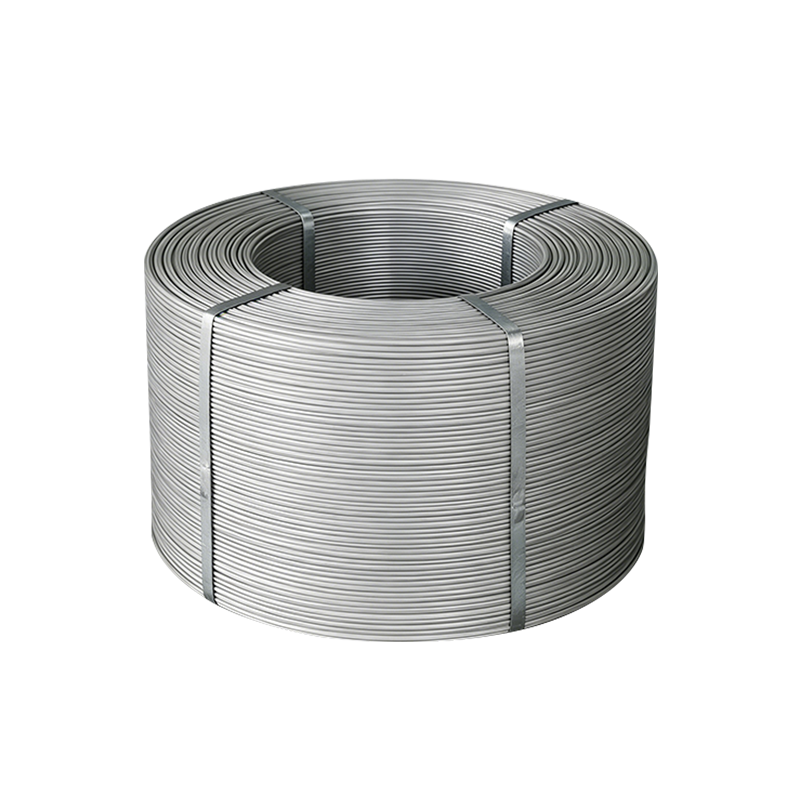
Aluminum alloy wire is a conductor material produced by adding controlled amounts of alloying elements — most commonly magnesium, silicon, iron, copper, or rare earth metals — to a base aluminum matrix. The result is a wire that retains aluminum's inherent low density and corrosion resistance while delivering substantially improved tensile strength, conductivity stability, and fatigue performance.
Pure aluminum wire (1xxx series, 99%+ Al) has an ultimate tensile strength of roughly 60–80 MPa, making it unsuitable for load-bearing or high-vibration applications. Common aluminum alloy wire grades used in electrical and structural service include:
- 1350-H19 — electrical-grade, near-pure Al, used in overhead power conductors (ACSR, AAAC)
- 6101 / 6201 — Al-Mg-Si alloy, heat-treatable, tensile strength 295–330 MPa, widely used in AAAC and ACAR conductors
- 5056 / 5154 — Al-Mg alloy, excellent corrosion resistance, common in marine and automotive wiring harnesses
- 8000-series (8030, 8176) — Al-Fe-Cu alloy, approved by NEC for building wire as a copper substitute
The key distinction lies in the microstructure: alloying elements introduce precipitation-hardening phases or solid-solution strengthening that pure aluminum lacks, enabling engineers to tune strength, creep resistance, and electrical conductivity for specific design requirements.
Mechanical and Electrical Properties: What Buyers Need to Know
Selecting the right aluminum alloy wire grade requires balancing two properties that often trade off against each other: electrical conductivity (measured as a percentage of IACS — International Annealed Copper Standard) and tensile strength. The table below compares the most commercially relevant grades:
| Alloy / Grade | Conductivity (% IACS) | Tensile Strength (MPa) | Primary Application |
|---|---|---|---|
| 1350-H19 | 61.0 | 159–186 | Overhead transmission conductors |
| 6201-T81 | 52.5 | 295–330 | AAAC, long-span power lines |
| 8030-H24 | 61.0 | 103–138 | Building wire (NEC 310 compliant) |
| 5056-O | 27.0 | 290–345 | Marine wiring, automotive harnesses |
Beyond conductivity and strength, three additional properties determine long-term service performance:
- Creep resistance — Under sustained tensile load, aluminum wire can elongate over time (creep), causing conductor sag in overhead lines. Alloys with Fe and Si additions (8030, 6201) exhibit significantly lower creep rates than pure aluminum.
- Fatigue resistance — Vibration-induced fatigue cracking is a major failure mode in overhead conductors. 6201 and rare-earth-doped alloys show fatigue endurance limits 30–50% higher than 1350-H19 at equivalent diameters.
- Corrosion resistance — The natural alumina (Al₂O₃) film on all aluminum alloys provides good atmospheric protection. Mg-containing alloys (5xxx series) perform best in salt-spray and coastal environments.
Major Applications Across Industries
Aluminum alloy wire is used across a wider range of end markets than most buyers anticipate. Each application places a distinct set of demands on the wire's properties.
Power Transmission and Distribution
The largest single market for aluminum alloy wire is overhead power conductors. All-Aluminum Alloy Conductors (AAAC) use 6201 stranded wire exclusively, offering a superior strength-to-weight ratio versus ACSR (steel-reinforced aluminum) on spans up to 500 m. Global transmission infrastructure upgrades, particularly in Asia and the Middle East, are driving demand for high-strength 6201 wire with diameters ranging from 2.0 mm to 4.5 mm.
Building and Construction Wiring
Following decades of concerns about connection failures with older pure aluminum wiring, 8000-series alloy wire (8030, 8176) was developed to eliminate these problems. NEC Article 310 and UL 83 now explicitly list 8000-series alloy as an approved conductor material for branch circuits in residential and commercial buildings. Its conductivity matches 1350-grade aluminum, while its improved ductility and creep resistance at terminals make it a cost-effective substitute for copper, which costs roughly 3–4× more per kilogram.
Automotive and EV Wiring Harnesses
Weight reduction is a top priority for automotive OEMs. Replacing copper with aluminum alloy wire in body harnesses and battery interconnects can reduce harness weight by 40–48%. The challenge is achieving adequate flexibility at small gauges (0.35–0.5 mm²), which is why Al-Fe-Cu and Al-Mg-Si micro-alloys with specialized drawing and annealing processes are used rather than standard grades. Tesla, Toyota, and several European OEMs have moved high-current battery cables to aluminum alloy wire across their EV lineups.
Welding and Additive Manufacturing
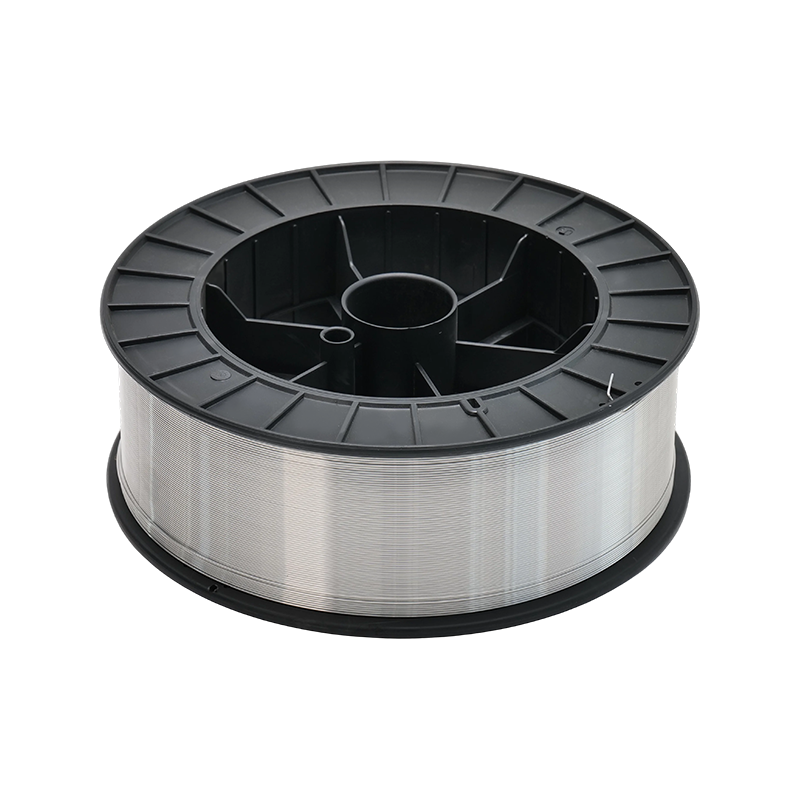
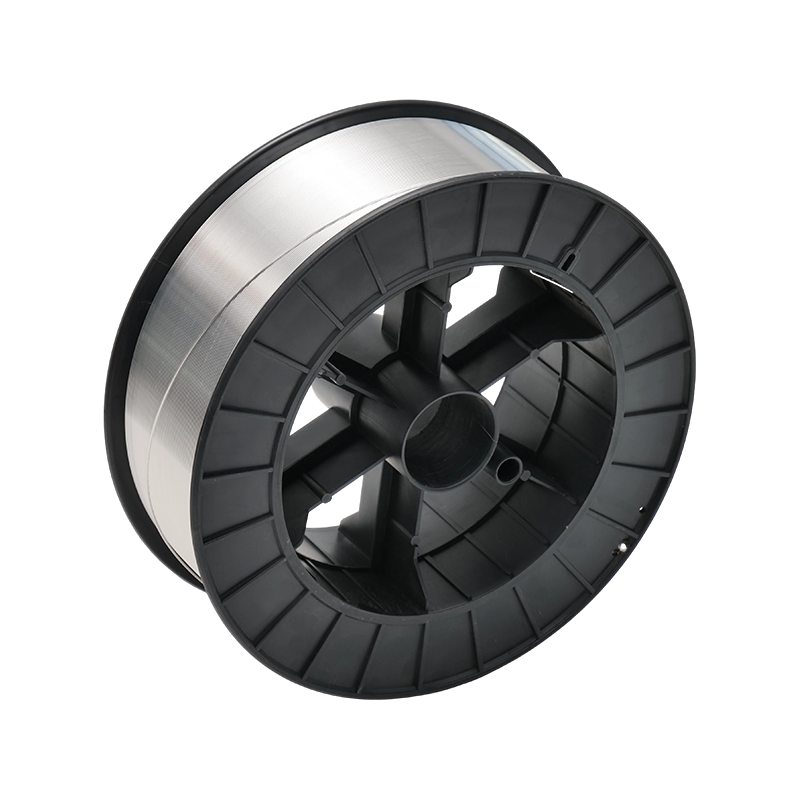
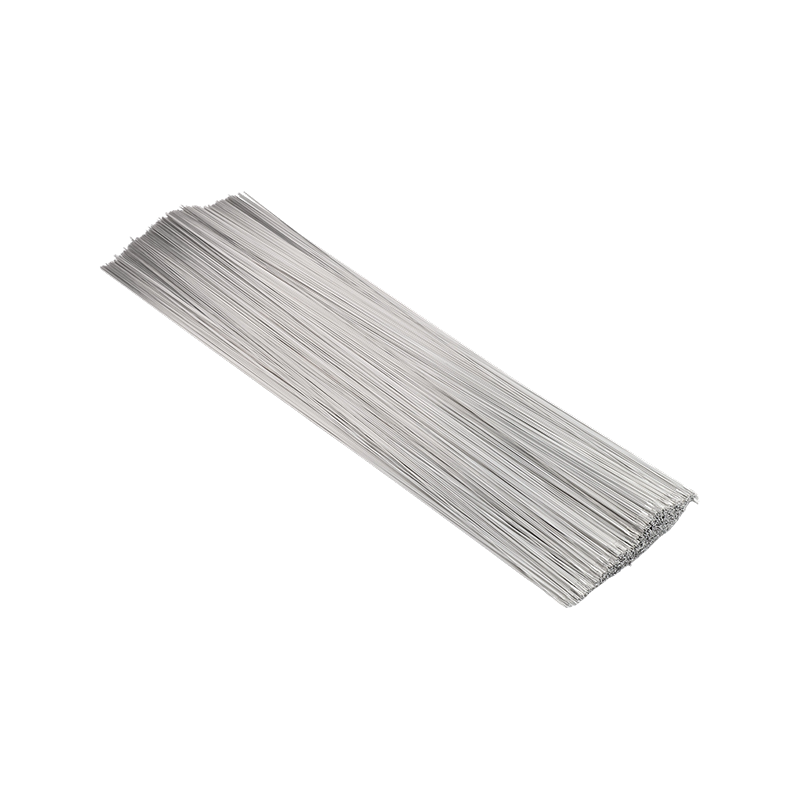
ER4043 and ER5356 aluminum alloy welding wire are the two most widely specified filler materials for MIG/TIG welding of aluminum structures. ER4043 (Al-Si) produces lower crack sensitivity and a smoother bead profile; ER5356 (Al-Mg) delivers higher tensile strength in the weld zone (~260 MPa vs. ~190 MPa for ER4043) and is the preferred choice for marine and structural welds. The same alloy families are now used as feedstock wire in wire-arc additive manufacturing (WAAM) for large aerospace and tooling components.
Manufacturing Process: From Rod to Final Wire
Understanding how aluminum alloy wire is manufactured helps buyers evaluate quality claims and specify the correct product parameters.
- Alloying and casting — Aluminum ingots are melted in induction or gas-fired furnaces. Alloying elements are added in precise ratios, degassed with nitrogen or argon flux to remove hydrogen porosity, and cast into rod via continuous casting (Properzi or Conform process) to diameters of 9–20 mm.
- Hot rolling — Cast rod is immediately hot-rolled at 400–500 °C through a series of rolling passes to refine grain structure and achieve the target rod diameter (typically 9.5 mm for wire drawing feedstock).
- Wire drawing — Rod is drawn through tungsten carbide or diamond dies in multiple passes, reducing diameter progressively. Intermediate annealing at 300–380 °C is applied as needed to restore ductility between drawing stages.
- Heat treatment (temper) — For heat-treatable alloys (6xxx, 2xxx), solution heat treatment followed by artificial aging (T6, T81) develops the precipitation-hardened microstructure that gives the wire its final mechanical properties.
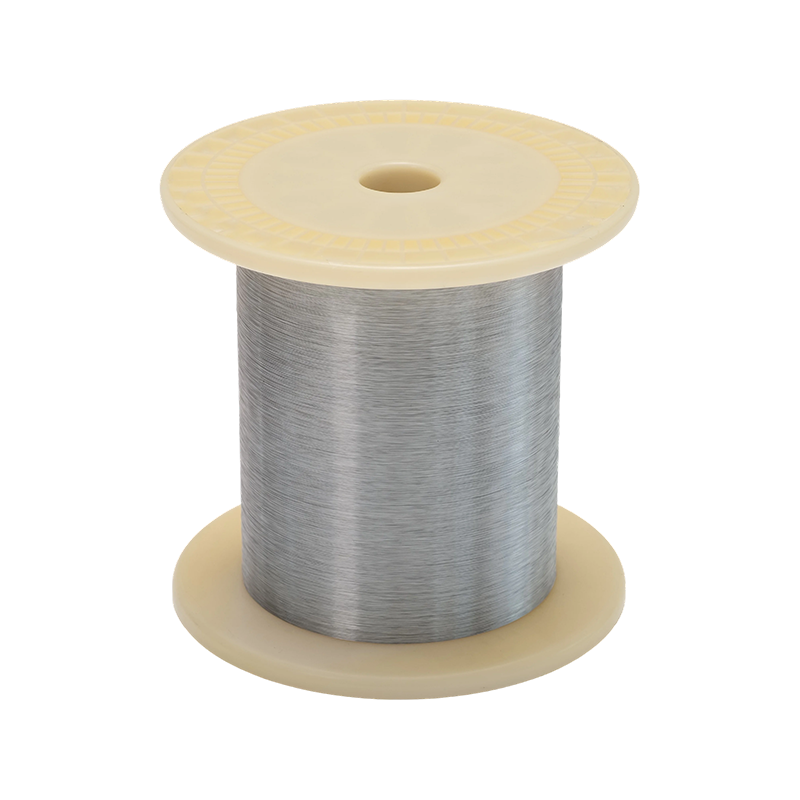
- Surface treatment and spooling — Wire may receive a light oil coating for corrosion protection or a tin/zinc plating for connector compatibility, then wound onto spools or coils to customer-specified weight.
Key quality checkpoints include chemical composition (OES spectrometry), tensile testing per ASTM B557, resistivity measurement per ASTM B193, and surface inspection for die marks or seams that create fatigue initiation sites.
How to Source Aluminum Alloy Wire: Standards, Specifications, and Supplier Evaluation
Procurement teams sourcing aluminum alloy wire for the first time — or switching suppliers — should reference the following standards to anchor their technical specifications:
- ASTM B396 / B397 — Concentric-lay stranded 6201-T81 alloy conductor
- ASTM B800 / B801 — 8000-series alloy wire for building applications
- IEC 62004 — Thermal-resistant aluminum alloy wire for overhead conductors
- AWS A5.10 — Bare aluminum and aluminum-alloy welding electrodes and rods
- GB/T 23308 — Chinese national standard for aluminum alloy wire used in overhead conductors (relevant for Asia-Pacific supply chain sourcing)
When evaluating suppliers, request mill test certificates (MTC) that include heat/lot number, chemical composition, tensile and elongation test results, and resistivity data. Reputable producers will reference third-party laboratory accreditation (ISO/IEC 17025) for their in-house testing. For high-volume or critical applications, consider requiring witnessed factory acceptance testing (FAT) or third-party inspection at the mill prior to shipment.
Lead times for standard grades (1350, 8030, 6201) typically range from 4–8 weeks ex-works for orders above 5 MT. Custom alloy compositions, non-standard diameters, or specialty tempers may require 10–16 weeks and minimum order quantities of 2–5 MT per size.