

 English
 中文简体
中文简体 русский
 Deutsch
Content
- 1 What Is MIG Wire and How It Works
- 2 MIG Wire Types: Matching Wire to Base Metal
- 3 MIG Wire Diameter Selection and Its Process Implications
- 4 Transfer Modes and Their Relationship to Wire and Gas Selection
- 5 Copper Coating, Spooling, and Wire Quality Factors
- 6 Common MIG Wire Feeding Problems and How to Resolve Them
What Is MIG Wire and How It Works
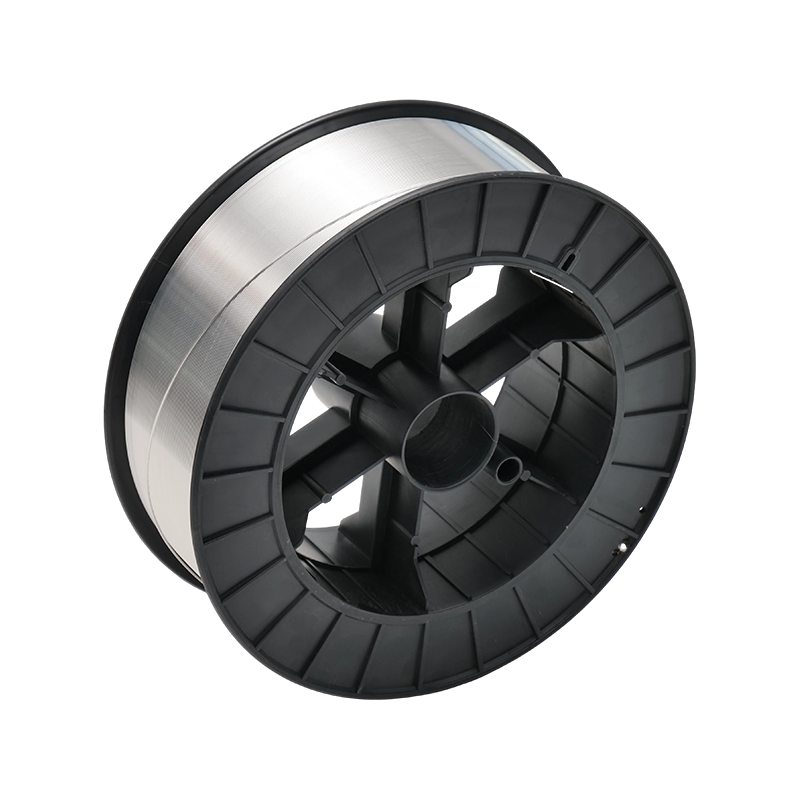
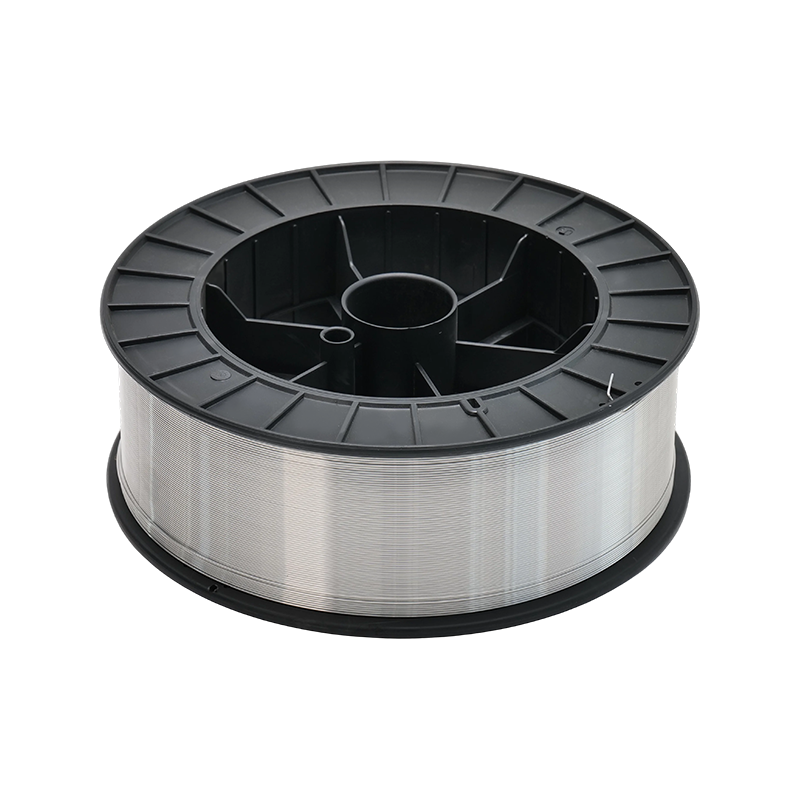
MIG wire is the consumable electrode used in MIG (Metal Inert Gas) welding — formally designated GMAW (Gas Metal Arc Welding) by the American Welding Society. It is a continuously fed solid wire that carries the welding current, melts under the heat of the arc, and deposits filler metal into the weld joint. Unlike stick electrodes that are replaced every few inches, MIG wire feeds from a spool through the welding gun at a rate precisely matched to the wire feed speed setting, enabling long, uninterrupted weld runs.
The wire serves two simultaneous functions: it is both the electrical conductor that sustains the arc and the filler material that forms the weld bead. The welding machine maintains a constant voltage while the wire feed speed controls the amperage — faster feed means more current draw and a hotter arc. This interdependence between wire diameter, feed speed, voltage, and shielding gas composition defines MIG welding's process window and must be dialed in for each material and joint configuration.
Shielding gas — typically argon, CO₂, or a blend — flows through the gun nozzle to displace atmospheric oxygen and nitrogen from the arc zone. Without it, the molten weld pool would oxidize and absorb nitrogen, producing a porous, brittle weld. The wire's deoxidizer content (primarily silicon and manganese in steel wires) provides a secondary line of defense against oxidation by reacting with any residual oxygen in the arc environment.
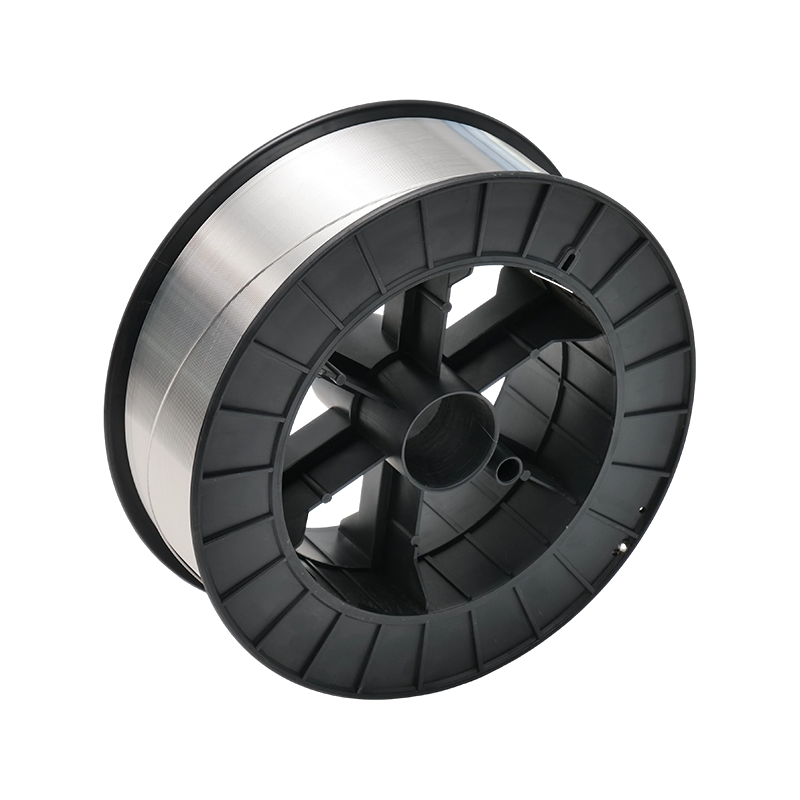
MIG Wire Types: Matching Wire to Base Metal
MIG wire is manufactured in alloy families that correspond to the base metal being welded. Using the correct wire chemistry is not optional — mismatched filler metal produces welds with inadequate strength, poor corrosion resistance, or cracking susceptibility. The main categories in commercial use are:
Carbon and Low-Alloy Steel Wire
The most widely used MIG wire globally. AWS ER70S-6 is the dominant general-purpose grade, specified for mild steel and low-carbon structural steel. Its elevated silicon (0.80–1.15%) and manganese (1.40–1.85%) content relative to the older ER70S-3 gives it superior deoxidation capability, making it tolerant of mill scale and light surface rust — a practical advantage in fabrication shops and construction sites where base metal cleanliness is imperfect. Minimum tensile strength of the deposited weld metal is 70,000 psi (483 MPa), consistent with structural steel grades such as ASTM A36 and A572.
For higher-strength low-alloy (HSLA) steels used in heavy equipment, pressure vessels, and offshore structures, wires such as ER80S-D2 or ER100S-G add molybdenum, nickel, or chromium to match base metal yield strength and toughness requirements. Preheat and interpass temperature requirements increase with alloy content and section thickness.
Stainless Steel Wire
Stainless MIG wires are designated by their alloy composition: ER308L for welding 304/304L stainless, ER316L for 316/316L, and ER309L for dissimilar joints between stainless and carbon steel. The "L" designation indicates low carbon content (≤0.03%), which reduces carbide precipitation at grain boundaries during cooling — the mechanism responsible for intergranular corrosion (sensitization) in standard carbon-content grades. ER308L and ER316L are the two most commonly stocked grades in fabrication shops serving food processing, pharmaceutical, and chemical industries.
Aluminum Wire
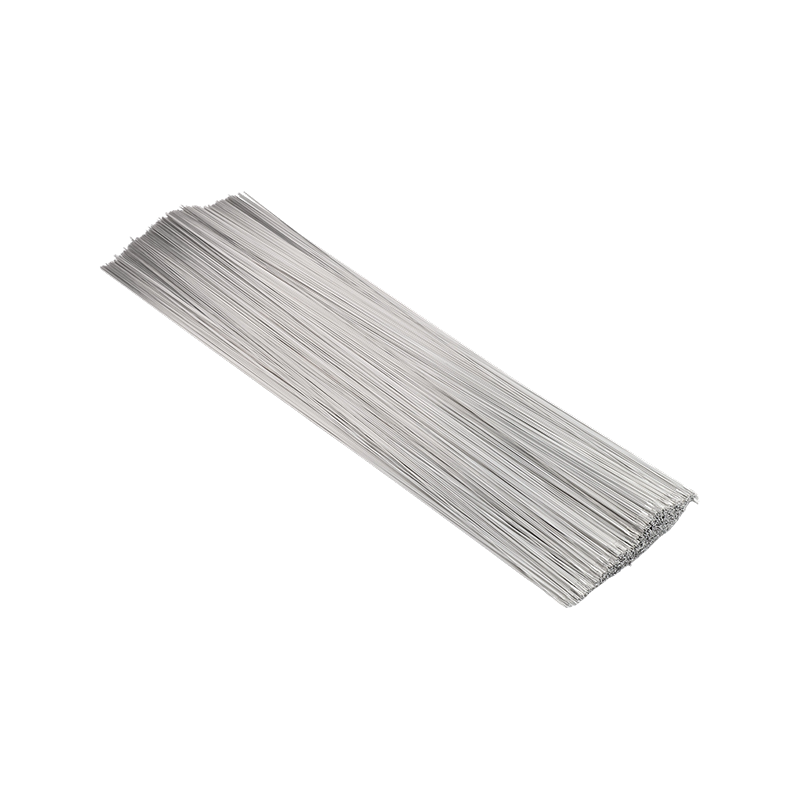
Aluminum MIG wires — ER4043 and ER5356 being the most common — are softer and more prone to feeding issues than steel wire due to aluminum's low modulus of elasticity and tendency to shave inside the liner. ER4043 (4.5–6% silicon) offers lower crack sensitivity and better fluidity for welding 6000-series and casting alloys. ER5356 (4.5–5.5% magnesium) produces higher tensile strength welds and is preferred for 5000-series structural aluminum, but is not recommended for service above 65 °C due to sensitization risk. Push-pull gun systems or spool guns that eliminate the long liner run are strongly recommended for aluminum wire to prevent birdnesting.
Flux-Cored Wire (FCAW)
Flux-cored arc welding (FCAW) wire is technically a subset of wire-fed welding and is often grouped with MIG consumables in the industry. Instead of a solid cross-section, FCAW wire has a tubular construction with flux and alloying elements packed in the core. Gas-shielded FCAW (FCAW-G) uses an external shielding gas like MIG, while self-shielded FCAW (FCAW-S) generates its own shielding from the flux — enabling outdoor welding in windy conditions where gas coverage would be disrupted. FCAW wires generally deposit faster than solid MIG wire at equivalent amperage and produce higher deposition rates, making them the preferred choice for heavy structural fabrication and shipbuilding.
MIG Wire Diameter Selection and Its Process Implications
Wire diameter is one of the first process parameters established when setting up a MIG welding application. It determines the practical amperage range, deposition rate, and minimum material thickness the process can handle without burn-through.
| Wire Diameter | Typical Amperage Range | Min. Material Thickness | Primary Application |
|---|---|---|---|
| 0.6 mm (0.023") | 30–90 A | 0.5 mm | Sheet metal, auto body repair |
| 0.8 mm (0.030") | 75–175 A | 1.0 mm | Light fabrication, general shop work |
| 0.9 mm (0.035") | 100–220 A | 1.5 mm | Most common all-purpose diameter |
| 1.0 mm (0.040") | 130–260 A | 2.0 mm | Medium plate, structural components |
| 1.2 mm (0.045") | 160–350 A | 3.0 mm | Heavy fabrication, robotic welding |
| 1.6 mm (1/16") | 250–500 A | 6.0 mm | Heavy plate, hardfacing, high deposition |
0.9 mm (0.035") remains the most versatile diameter for general fabrication. It covers material thicknesses from 1.5 mm sheet up to unlimited plate thickness with multiple passes, operates well with both short-circuit and spray transfer modes, and is compatible with the widest range of MIG machines in the field. Moving to 1.2 mm adds deposition rate but requires a machine capable of 200+ amperes and introduces burn-through risk on thinner material.
Transfer Modes and Their Relationship to Wire and Gas Selection
MIG welding operates in different metal transfer modes depending on the combination of voltage, wire feed speed, wire diameter, and shielding gas. Each mode has a distinct arc character, spatter level, penetration profile, and positional capability. Understanding transfer mode is essential for selecting the right MIG wire and shielding gas combination for a given application.
Short-Circuit Transfer
At low voltage and wire feed speed, the wire tip repeatedly touches the weld pool, short-circuits, melts off, and re-establishes the arc — typically 90–200 times per second. This produces a low-heat input weld suitable for thin material and out-of-position welding. High-CO₂ shielding gas (75/25 Ar/CO₂ or 100% CO₂) is preferred in short-circuit mode because CO₂ promotes deeper penetration and tolerates the arc instability inherent in this transfer mode. Spatter is moderate to high with 100% CO₂; the 75/25 blend reduces spatter while retaining acceptable penetration.
Spray Transfer
Above a threshold current (the spray transition current, typically 180–220 A for 0.9 mm ER70S-6), metal transfers as a continuous stream of fine droplets across the arc without touching the weld pool. Spray transfer produces a very smooth, spatter-free bead with deep penetration and high deposition rate. It requires a shielding gas with at least 80% argon — typically 80/20 or 90/10 Ar/CO₂ — to sustain the stable, axially directed spray. Pure CO₂ or high-CO₂ blends cannot support spray transfer. Spray is limited to flat and horizontal positions due to the high heat input and fluid weld pool.
Pulsed MIG
Pulsed MIG electronically alternates between a high peak current (sufficient for spray transfer) and a low background current that maintains the arc without depositing metal. The result is spray-quality bead appearance with short-circuit-level heat input — enabling out-of-position welding on thicker material, welding of heat-sensitive alloys like thin stainless or aluminum, and improved fusion on root passes. Pulsed MIG requires an inverter-based power source with a dedicated pulse waveform generator; it is not achievable with older transformer-rectifier machines.
Copper Coating, Spooling, and Wire Quality Factors
Not all MIG wire of the same AWS classification performs identically on the welding line. Wire manufacturing quality significantly affects arc stability, feeding reliability, and weld bead consistency — factors that directly impact productivity and rework rates in production environments.
Copper coating on carbon steel MIG wire serves three functions: it reduces contact tip wear by lubricating the wire-to-tip interface, improves electrical conductivity at the contact point, and provides a barrier against oxidation during storage and handling. Coating thickness and uniformity are critical — too thick, and copper flakes off inside the liner and contact tip, causing feeding resistance and arc interruptions; too thin, and the wire oxidizes in humid storage conditions, destabilizing the arc. Premium wire grades apply 0.3–0.5 µm of copper with tightly controlled uniformity, measured by the copper coating weight specified in AWS A5.18.
Wire cast and helix — the dimensional characteristics of the wire's natural curve as it comes off the spool — affect how consistently the wire feeds through the liner and exits the contact tip. Excessive cast (too large a diameter loop) causes the wire to wander in the arc zone; insufficient cast causes the wire to press against one side of the contact tip bore, increasing tip wear. Properly controlled cast and helix are particularly important for robotic and automated MIG applications where arc position must be repeatable to within fractions of a millimeter.
Spool packaging standards matter in high-volume production. The most common formats are:
- D100 / 1 kg mini-spools — for MIG machines with small spool housings; common in light fabrication and maintenance shops
- D200 / 5 kg spools — standard for workshop MIG welders; balance between spool change frequency and storage footprint
- D300 / 15 kg spools — preferred for semi-automatic and robotic cells to minimize downtime from spool changes
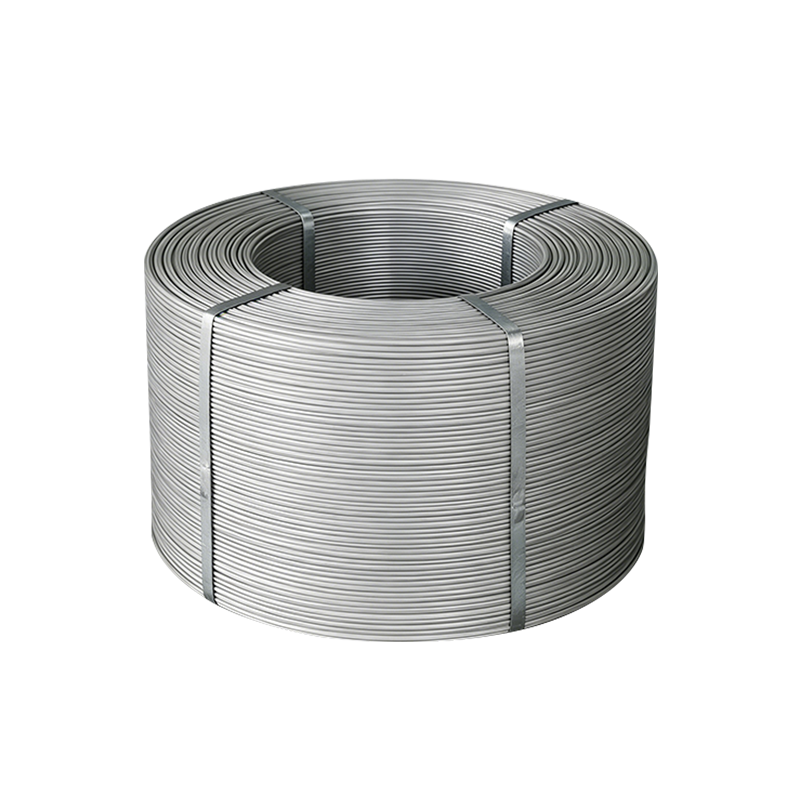
- Drum / 250–500 kg bulk packs — used with wire straighteners in high-volume robotic lines; maximum productivity with minimal handling
Common MIG Wire Feeding Problems and How to Resolve Them
Feeding problems are the most frequent cause of arc instability and productivity loss in MIG welding operations. Most can be traced to a small number of root causes that are straightforward to diagnose and correct.
Birdnesting — wire tangling in the drive roll area — is caused by a blockage downstream of the drive rolls while the rolls continue pushing wire. The blockage is almost always in the liner (kinked, dirty, or wrong inner diameter for the wire size) or at the contact tip (worn bore, partially melted tip orifice, or spatter buildup). Resolution: replace the liner if it has been in service more than 3–6 months on a production line, and always match the liner inner diameter to within 0.1–0.2 mm of the wire diameter.
Erratic arc / wire speed fluctuation is often caused by drive roll slippage. Steel wire requires a knurled or V-groove drive roll; using a smooth roll that works for flux-cored wire will slip under the higher feed force required by solid wire. Drive roll pressure should be set to the minimum that prevents slippage — excessive pressure crushes the wire, generating fines that clog the liner and contact tip.
Excessive spatter beyond what the transfer mode and gas blend would normally produce indicates one or more of: voltage too low for the wire feed speed (arc too short, causing stubbing), incorrect shielding gas mixture, contaminated base metal, or wire oxidation. If the wire surface shows a dull or discolored appearance rather than bright copper color, the wire has oxidized — typically from storage in humid conditions without adequate moisture protection — and should be replaced.
Contact tip burnback — the weld fusing to the contact tip — occurs when the wire feed momentarily stops while the arc continues, melting wire back into the tip bore. The primary causes are drive roll slippage, spool brake tension set too high (creating back-tension that the drive rolls cannot overcome), and liner resistance. A secondary cause is operating with voltage too high relative to wire feed speed, which creates an excessively long arc that can melt the contact tip face.