

 English
 中文简体
中文简体 русский
 Deutsch
A fabricator who is ordering aluminum welding wire for a new production line quickly discovers that the filler metal has as much influence on joint quality as the power source. If the wire alloy does not match the base metal, the weld can crack after cooling, soften in the heat-affected zone, or simply feed badly through the gun. The practical starting point is to understand that aluminum welding wire is not one product. It is a family of alloys that have been engineered for different base metals and different service conditions. For most industrial users, the answer comes down to two MIG filler alloys (ER4043 and ER5356) and one TIG rod, with the final choice guided by the thickness, the alloy being welded, and the required joint strength.
Content
What Aluminum Welding Wire Is and Why the Alloy Matters
Aluminum welding wire is a solid filler metal used in MIG and TIG welding. In MIG welding, the wire is continuously fed from a spool, melted by an electric arc, and deposited into the joint. In TIG welding, the wire is usually fed manually by hand into the weld pool. The wire itself is not just aluminum; it contains controlled amounts of silicon, magnesium, or other elements that change the melting point, fluidity, and mechanical properties of the weld.
The most common families are 4xxx alloys, which contain silicon, and 5xxx alloys, which contain magnesium. Silicon improves fluidity and makes the weld easier to produce at high speed. Magnesium increases strength and improves resistance to corrosion. This is why a 4043 wire is rarely the best replacement for a 5356 wire in a structural part. They are designed for different jobs.
ER4043 vs ER5356: A Practical Comparison
Before ordering any spool, the buyer should compare the two workhorse alloys. ER4043 is a silicon-rich filler with about 4.5 to 6% silicon. It flows well and produces a bright, smooth bead. It is a good choice for welding heat-treatable alloys like 6061 and 6005, and for cast aluminum where surface clarity matters. ER5356 is a magnesium-rich filler with about 4.5 to 5.5% magnesium. It produces a stronger, more ductile weld and provides better corrosion resistance, especially in marine or chemically aggressive atmospheres. The trade-off is that ER5356 needs more careful arc control and may require lower travel speed.
ER4043
ER4043 is a 4xxx alloy with silicon as the principal alloying element. The silicon content lowers the melting point and increases the fluidity of molten aluminum. That is why it is often used to weld castings and alloys such as 6061. It also produces a smoother bead and less cleaning. The downside is lower total strength and a tendency to soften if the joint is heat-treated afterwards. A 4043 weld is generally not recommended for applications that require high corrosion resistance in salt water.
ER5356
ER5356 is a 5xxx alloy with magnesium as the main addition. Magnesium strengthens the weld deposit and keeps it ductile. It is also more tolerant of surface contamination in field conditions. ER5356 is the standard choice for welds on 5083, 5052, and 5456 plate, and it is often used in shipbuilding, pressure vessels, and structural frames. It is slightly more difficult to feed because of its higher strength, and it can require a better shielding gas setup.
| Alloy | Primary Addition | Typical Use | Key Characteristic |
|---|---|---|---|
| ER4043 | Silicon (~5%) | Cast aluminum, 6061, automotive repair | Excellent flow and low shrink |
| ER5356 | Magnesium (~5%) | Structural frames, 5083, 5052, marine | High strength and corrosion resistance |
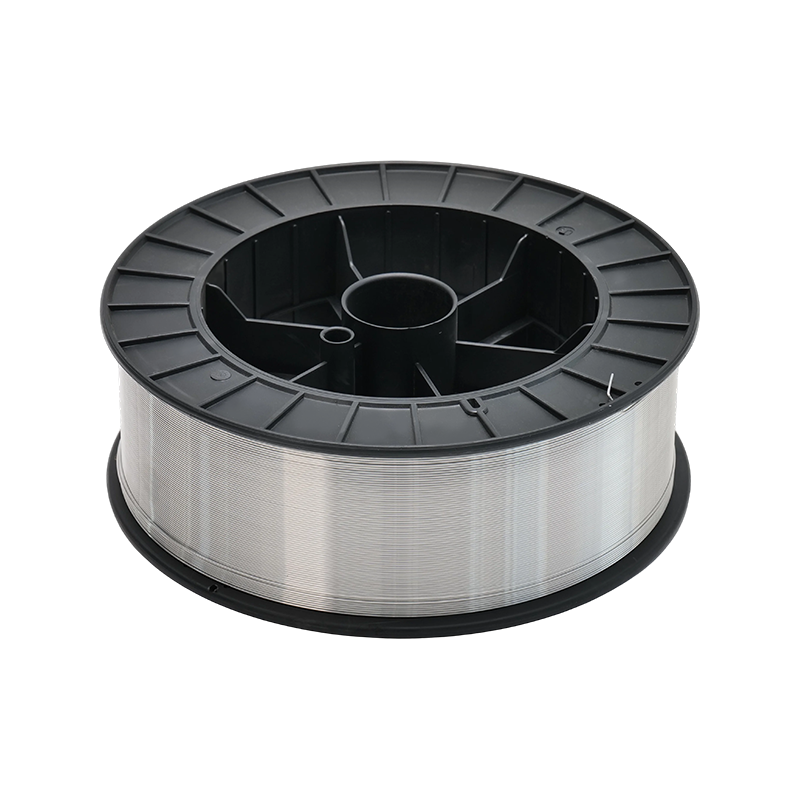
If you fabricate in both types of jobs, a supplier that can deliver a consistent MIG aluminum welding wire in 4043 and 5356 grades simplifies your inventory. Wire that is wound properly and shipped in a sealed spool will feed better and reduce rejects.
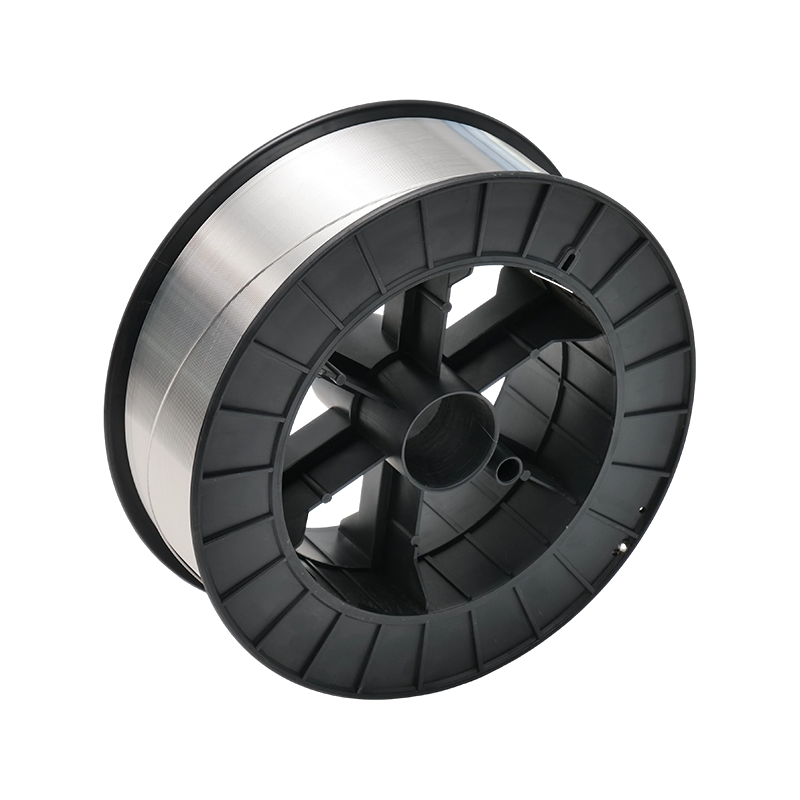 MIG Welding Wire for Aluminum FabricationSpooled aluminum MIG wire in 4043 and 5356 grades, wound properly and shipped in sealed spools. Ensures consistent feeding and reduces rejects, ideal for high-volume production and thick sections.View Product →
MIG vs TIG: Choose the Process Before the Wire
MIG welding is the faster, more automatic option for aluminum fabrication. It requires a spool gun or a push-pull system because aluminum wire is soft and can easily birdnest. With the right setup, MIG can deposit large amounts of filler metal in a short time, which makes it ideal for thick sections and high-volume production. TIG welding uses a non-consumable tungsten electrode and a separate filler rod. It gives the operator far more control over heat input and allows very clean, precise welds on thin-walled components, but it is much slower and requires more skill.
For MIG welding on aluminum, the minimum requirement is a constant-current (CC) power source with a suitable spool gun or push-pull torch. The liner should be polymer or polytetrafluoroethylene (PTFE) rather than steel, because aluminum wire will shave off steel and create a powder that clogs the system. A U-groove drive roll is essential. If you choose TIG, you will need a high-frequency AC inverter and a torch with a clear view of the weld bead, plus a bottle of 100% argon for thin sections.
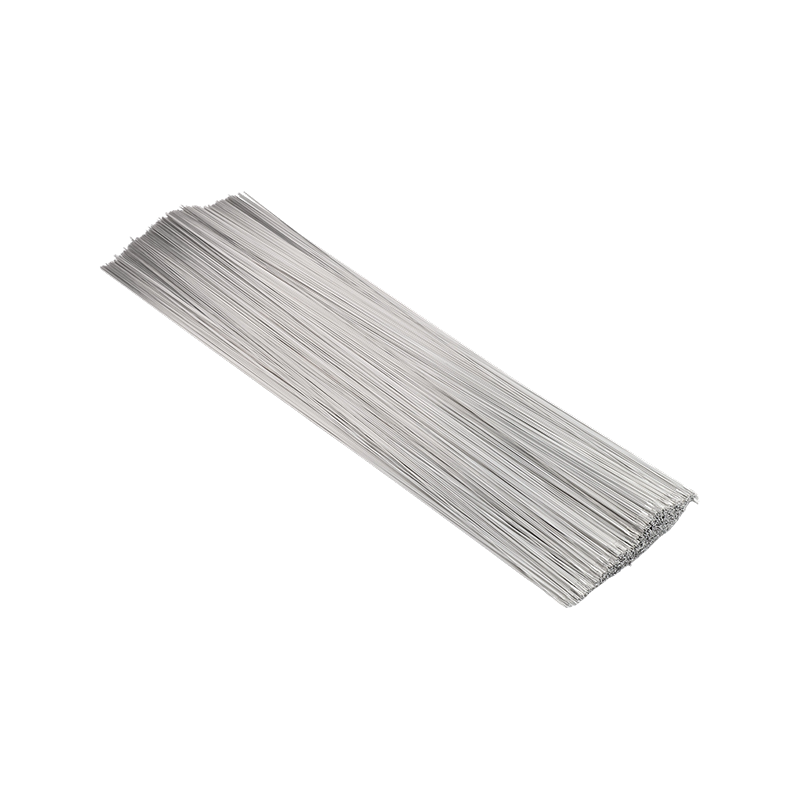
Your process choice dictates the form of filler metal you need. For MIG, you need a spooled wire; for TIG, a straight rod. This is not only a convenience issue. Some alloys are available in both forms, but their feed behavior and joint properties can differ. For instance, a TIG welding wire is often produced with precisely controlled diameter to allow smooth manual feeding into the pool.
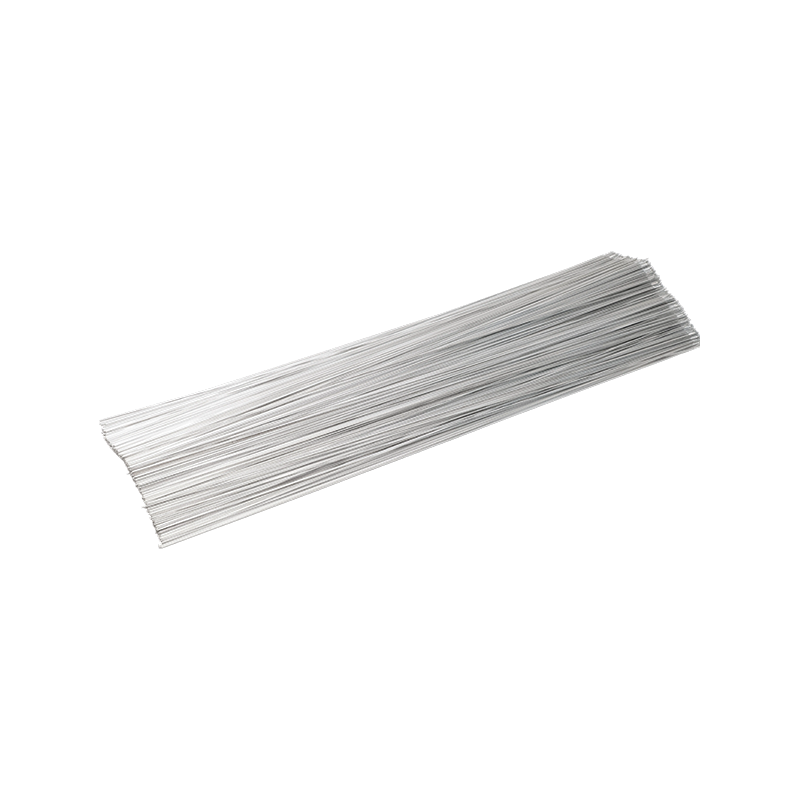 TIG Welding Wire for Precision Aluminum WeldsStraight aluminum TIG wire with precisely controlled diameter for smooth manual feeding. Suitable for clean, accurate welds on thin-walled components, offering operator control over heat input.View Product →
Feeding, Porosity, and Storage: How to Avoid Failed Welds
One of the most common problems with aluminum welding wire is not the wire itself but the way it is handled. Aluminum is soft, so a slight bend or misaligned spool can cause the wire to kink and jam in the liner. The solution is to use the correct size liner, keep the contact tip as close as possible to the gun, and clean the liner on a regular basis. Very often, feeders that work fine with steel wire need to be upgraded with a larger diameter liner and a special U-groove drive roll for aluminum.
Porosity is another frequent defect. Aluminum is a reactive metal. Its surface oxide and moisture on the wire can introduce hydrogen into the weld pool, which leads to pinholes. That is why high quality aluminum welding wire is cleaned, deburred, and sealed in dry packaging. Look for spools that are shrink-wrapped and supplied with a desiccant. For long runs, choose a wire whose surface is smooth and free from drawing residue.
Aluminum wire has a lower yield strength than steel, so it is easy to deform. A spool that gets dropped on the floor can develop a flat spot, which makes the wire feed erratically. Keep spools in their original boxes, store them away from heat or direct sunlight, and never leave a partially used spool without a dust cover.
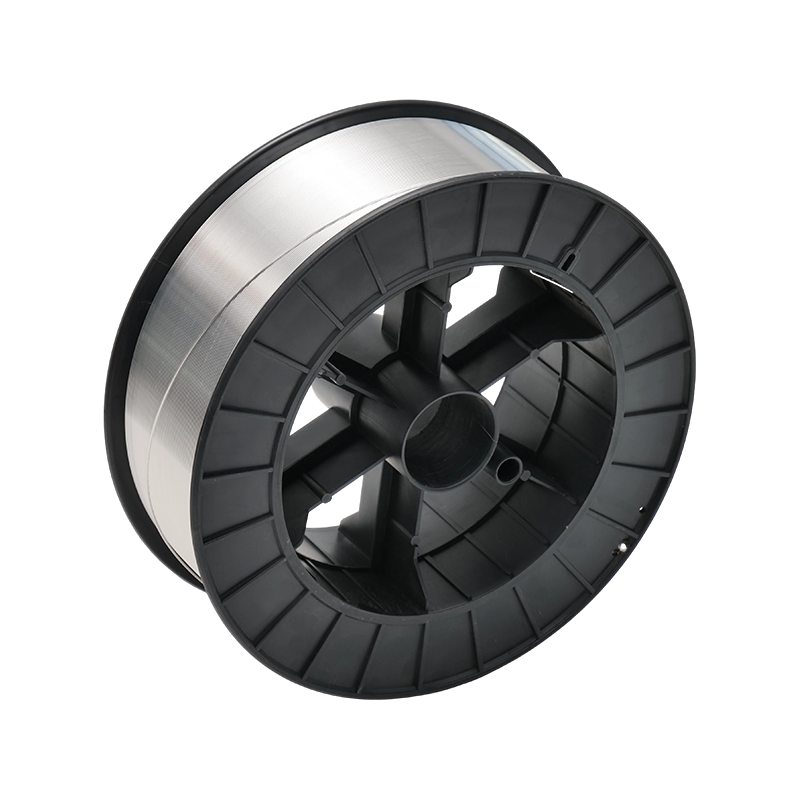
For welded assemblies that face marine or chemical environments, an AlMg6 aluminum alloy wire with higher magnesium content offers better corrosion resistance and work-hardening behavior. This alloy is also available for structural welding applications where strength matters.
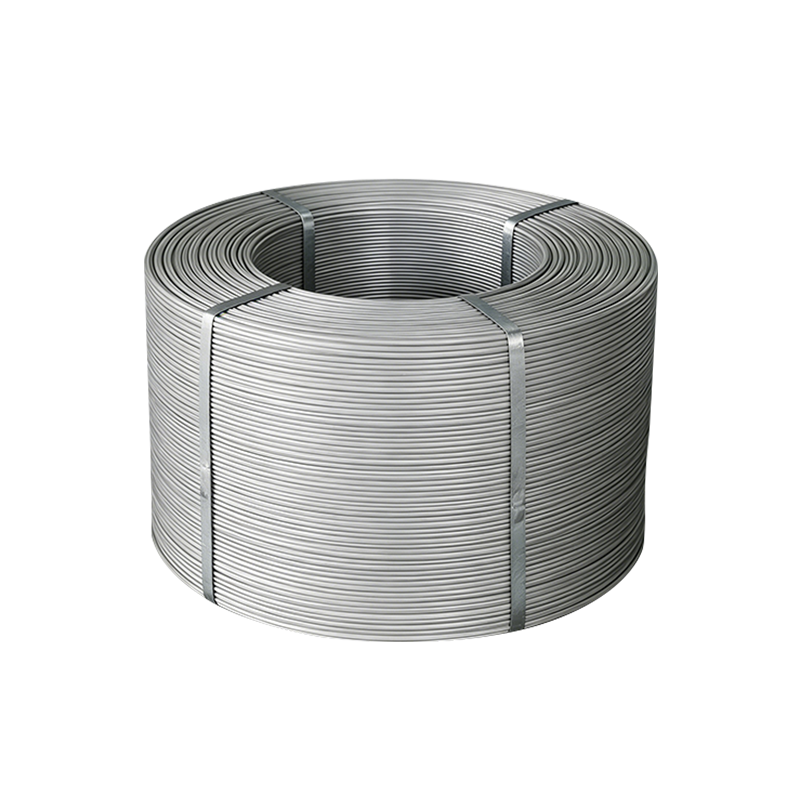 AlMg6 Aluminum Alloy Wire for Corrosion-Resistant WeldsAlMg6 wire with 5.8-6.8% magnesium provides excellent corrosion resistance and weldability. Ideal for marine, chemical, and structural applications, supported by ISO 9001, CE, and IATF 16949 certifications.View Product →
What a Certified Supplier Should Provide
Industrial buyers do not just need a price quote. They need confidence that every spool will arrive with a verified chemical composition and a traceable batch number. Three certifications reduce the risk of receiving off-spec material: ISO 9001 demonstrates a working quality management system; CE marking covers the product's conformity for the European market; and IATF 16949 is a strict standard used in automotive supply chains. A supplier that holds these certifications and can share its quality control procedures before shipment is preferable to a provider that only offers a low price.
The supplier should also be able to provide practical guidance on alloy selection, spool size, and feedability. If the production line runs continuously, you will need a supplier who can maintain consistent delivery and hold stock. At Jiangsu Hetuo Aluminum Wire, we manufacture aluminum wire in a plant that operates with these certifications and supplies international industrial customers. Our location in Lianyungang, China, provides close access to port logistics for export orders.
Wire is delivered on cardboard spools or plastic spools in 1 lb, 5 lb, or 20 lb sizes. The most common production size in aluminum is the 12 inch (300 mm) spool, often called a B300 spool. For manual TIG welding, rods are typically sold in 1 kg boxes. Suppliers that use vacuum-sealed packaging and include desiccant help protect the wire from humidity. On the delivery side, a supplier with a stable export record and a location close to an international port will keep transit times predictable.
A Quick Selection Check
Start with the base metal and the working environment. If the part is cast or a 6xxx series extrusion, start with ER4043. If it is 5xxx series plate or a structural assembly that needs strength and corrosion resistance, go with ER5356. For MIG, order a spool with the right diameter and liner; for TIG, order a cut-length rod of the matching alloy. Then check the packaging, look for a certificate of analysis, and store the material in a dry, clean area.
Before finalizing an order, ask the supplier's technical team to confirm whether the filler alloy is compatible with your base metal and post-weld treatment. This is particularly important when you are welding an anodized part or when the joint must be painted later. A small mistake at the ordering stage is cheap to fix; a weld crack after fabrication is expensive.
- Confirm the parent alloy and the required weld strength.
- Select the filler alloy: ER4043 for flow and thin castings, ER5356 for strength and corrosion.
- Choose the process: MIG for high deposition, TIG for precise control.
- Check the wire diameter against the base metal thickness.
- Ask for the wire's chemical composition certificate and batch traceability.