

 English
 中文简体
中文简体 русский
 Deutsch
Content
What Sets Aluminum Alloy Wire Apart from Pure Aluminum Wire
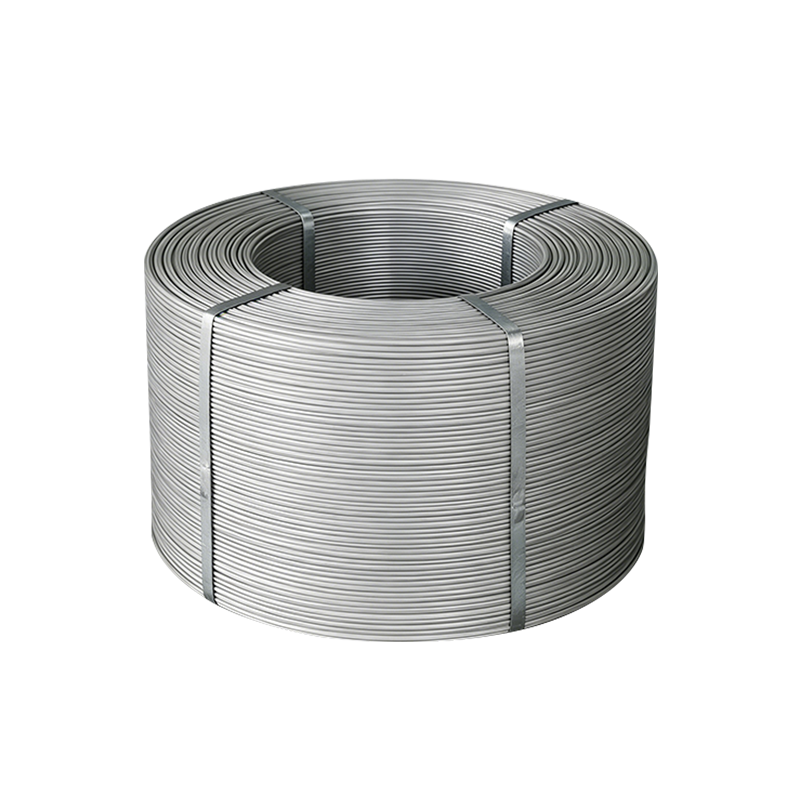
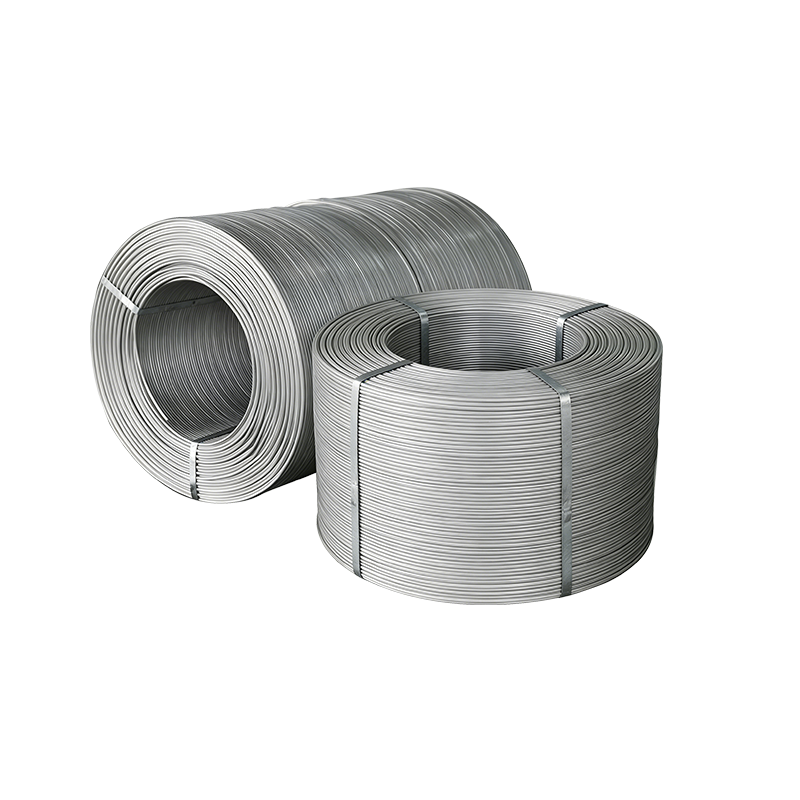
Aluminum alloy wire is produced by adding controlled quantities of alloying elements — most commonly magnesium, silicon, copper, zinc, or manganese — to a pure aluminum base. The result is a wire with significantly improved mechanical performance compared to commercially pure aluminum (1xxx series), while retaining the core advantages of low density, corrosion resistance, and electrical conductivity that make aluminum attractive across industrial applications.
Pure aluminum wire (99.5–99.7% Al) has a tensile strength of roughly 60–100 MPa in the annealed condition — adequate for some electrical conductor applications but insufficient for structural, spring, or high-stress mechanical uses. Alloying raises tensile strength to anywhere from 150 MPa to over 500 MPa depending on the alloy series and temper, without a proportional increase in weight. This strength-to-weight advantage is the primary reason aluminum alloy wire has displaced steel and copper wire in a broad range of transmission, aerospace, and manufacturing applications.
The trade-off is that alloying reduces electrical conductivity. Pure aluminum has a conductivity of approximately 61% IACS (International Annealed Copper Standard). Most structural alloy wires fall in the 30–55% IACS range. For applications where both conductivity and mechanical strength are required — overhead power transmission being the most prominent example — alloy selection and wire construction must be carefully balanced.
Major Alloy Series and Their Characteristics
Aluminum alloys are classified into series based on their primary alloying element. Each series has a distinct property profile that determines its suitability for wire drawing and end-use performance.
| Series | Primary Alloying Element | Typical Tensile Strength | Key Characteristics |
|---|---|---|---|
| 1xxx | None (≥99% Al) | 60–100 MPa | Highest conductivity (~61% IACS), excellent formability, low strength |
| 5xxx | Magnesium | 180–310 MPa | Good corrosion resistance including marine environments, non-heat-treatable, work-hardens well |
| 6xxx | Magnesium + Silicon | 150–310 MPa | Heat-treatable, good conductivity retention (~52–55% IACS), dominant series for AAAC overhead conductors |
| 7xxx | Zinc | 400–570 MPa | Highest strength of all aluminum alloys, heat-treatable, used in aerospace and specialty wire applications |
| 8xxx | Iron + Silicon (or other) | 160–250 MPa | Specifically developed for electrical conductor wire (8030, 8176), improved creep resistance over 1xxx |
Among these, the 6201 alloy (6xxx series) and 8030/8176 alloys (8xxx series) are the most widely specified for electrical wire applications, while 5xxx and 7xxx series wires dominate structural, aerospace, and mechanical end uses where conductivity is secondary to strength and fatigue resistance.
Electrical Conductor Applications
Aluminum alloy wire forms the basis of several standardized overhead conductor constructions used in power transmission and distribution infrastructure worldwide.
AAAC (All Aluminum Alloy Conductor)
AAAC is constructed entirely from 6201-T81 aluminum alloy wire strands. Compared to ACSR (Aluminum Conductor Steel Reinforced), AAAC offers better corrosion resistance — particularly in coastal and industrial environments where the steel core of ACSR is vulnerable — and a more favorable strength-to-weight ratio for long-span overhead lines. Conductivity is typically 52.5% IACS, and tensile strength of the finished conductor ranges from 295 to 325 MPa depending on stranding configuration.
ACAR (Aluminum Conductor Alloy Reinforced)
ACAR combines 1350 series pure aluminum strands for conductivity with a central core of 6201 alloy strands for mechanical strength. The ratio of alloy to pure aluminum strands is adjusted to meet specific ampacity and sag-tension requirements for a given line design. This construction offers more design flexibility than either ACSR or AAAC for distribution network applications.
Building Wire: 8000 Series Alloys
Following failures with early-generation pure aluminum building wire in the 1960s and 1970s — caused primarily by creep at connection points under cyclic thermal loading — the 8030 and 8176 alloys were developed specifically to address these issues. These alloys have improved creep resistance, better elongation, and more stable connection performance compared to 1350 aluminum. They are now listed under NEC Article 310 and ASTM B800/B801 as acceptable for branch circuit wiring in residential and commercial construction when used with AA-rated connectors and devices.
Mechanical and Structural Wire Applications
Beyond electrical conductors, aluminum alloy wire serves a broad range of load-bearing and functional mechanical roles where its combination of low density, corrosion resistance, and formability provides advantages over steel.
- Wire rope and cable: 5xxx and 7xxx series alloy wires are drawn and stranded into rope constructions for marine rigging, architectural tensile structures, and suspension systems. Aluminum wire rope weighs roughly one-third as much as equivalent steel rope, a critical advantage in weight-sensitive applications such as sailboat rigging and lightweight lifting systems.
- Spring wire: 7075 and 7178 alloy wires are used in aerospace and precision instrument spring applications where the spring must operate in a corrosive environment that would degrade steel. The elastic modulus of aluminum (approximately 69 GPa) is about one-third that of steel, so aluminum springs must be designed for larger deflection to achieve equivalent force output.
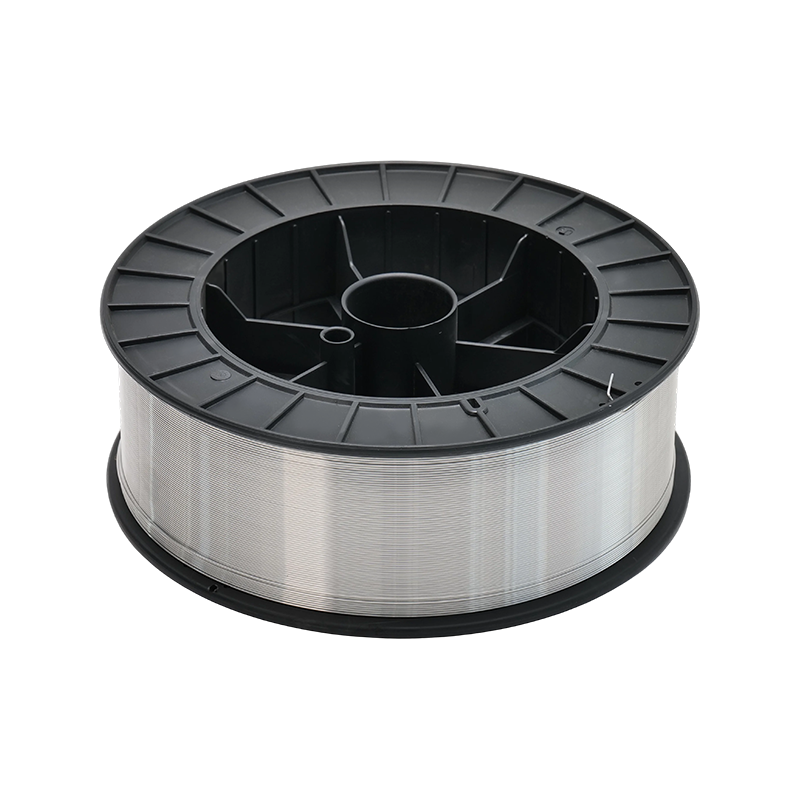
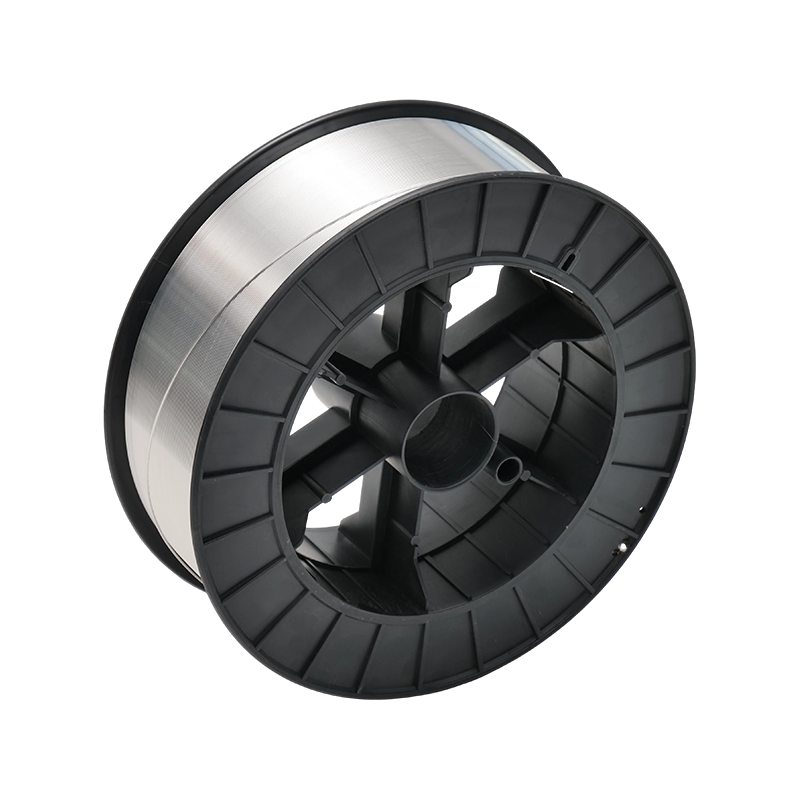
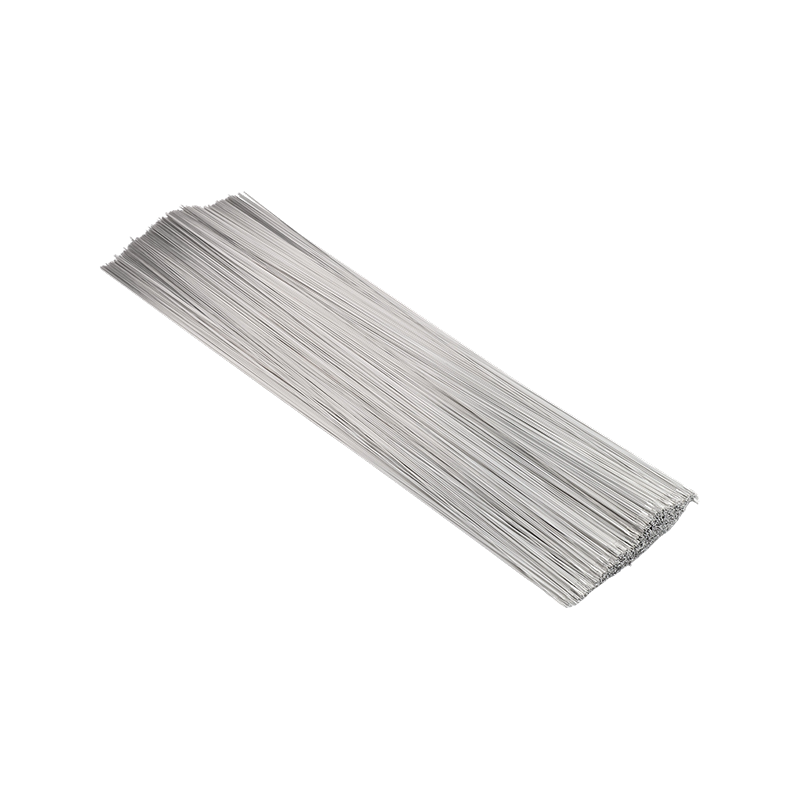
- Welding wire: 4xxx series (silicon-containing) and 5xxx series aluminum alloy wires are the primary filler materials for MIG and TIG welding of aluminum structures. Alloy selection for welding wire must be matched to the base metal composition to avoid hot cracking and achieve adequate joint strength.
- Armoring and screening: Aluminum alloy wire is applied as helical armor over power cables and communication cables to provide mechanical protection and, in some constructions, electromagnetic shielding. The non-magnetic properties of aluminum are particularly valuable in AC cable armoring, where steel armor would introduce induced losses.
- Mesh and woven products: Fine-gauge alloy wire is woven into filtration mesh, architectural mesh facades, and insect screening. Alloys in the 5xxx series are preferred for outdoor mesh applications due to their resistance to pitting corrosion without surface treatment.
Wire Drawing Process and Temper Designations
Aluminum alloy wire is produced by hot-rolling cast rod to an intermediate diameter, then cold-drawing through progressively smaller dies to reach the final wire gauge. Each drawing pass work-hardens the material, increasing tensile strength and reducing ductility. The final mechanical properties depend on both the alloy composition and the temper achieved through the combination of cold work and any subsequent heat treatment.
Temper designations follow the Aluminum Association system:
- -O (Annealed): Fully softened by heat treatment after drawing. Maximum ductility, minimum strength. Used where formability and bending life are prioritized over tensile load capacity.
- -H1x (Strain hardened): Strength increased by cold working alone, no subsequent thermal treatment. The second digit indicates degree of hardening: H11 (light) through H18 (full hard). Used for non-heat-treatable alloys such as 1xxx and 5xxx series.
- -T6 (Solution heat treated and artificially aged): Applied to heat-treatable alloys (6xxx, 7xxx). Achieves near-maximum strength for the alloy through precipitation hardening. 6201-T81 — the standard temper for AAAC conductor wire — is solution heat treated, lightly cold worked, then artificially aged.
- -T9 (Solution heat treated, artificially aged, then cold worked): Used when maximum strength is required and some reduction in ductility is acceptable. Less common in wire than T6/T8 variants.
For procurement, always specify both alloy designation and temper. Two wires with the same alloy number but different tempers can have tensile strength values that differ by 50% or more, and specifying only the alloy number without temper leaves the mechanical performance undefined.
Key Standards and Certifications to Reference
Aluminum alloy wire for both electrical and mechanical applications is governed by a set of internationally recognized standards that define composition, mechanical property requirements, dimensional tolerances, and test methods. Referencing the applicable standard when specifying or purchasing wire ensures that supplier data is being reported on a consistent and verifiable basis.
- ASTM B398 / B399: Covers 6201 aluminum alloy wire and AAAC conductor constructions. The most widely referenced standard for overhead transmission conductor wire in North American markets.
- ASTM B800 / B801: Covers 8000 series aluminum alloy conductor wire and stranded conductor for building wire applications.
- IEC 60104: International standard for aluminum-magnesium-silicon alloy wire for overhead line conductors, broadly equivalent to ASTM B398 and used as the reference standard in European, Asian, and Middle Eastern markets.
- EN 13602: European standard for drawn copper wire — referenced here because it is frequently used as a benchmark when comparing aluminum alloy wire conductivity and mechanical performance against copper in building wire substitution discussions.
- AWS A5.10: American Welding Society specification for bare aluminum and aluminum alloy welding wire and rods, covering filler alloy composition and mechanical property requirements.
When sourcing aluminum alloy wire for critical applications, request mill test reports (MTRs) that document actual measured values for tensile strength, elongation, and conductivity (where applicable) against the specified standard — not merely a declaration of compliance.