

 English
 中文简体
中文简体 русский
 Deutsch
Content
- 1 What Is 1090 Aluminum Wire?
- 2 Chemical Composition and Key Physical Properties
- 3 Primary Applications of 1090 Aluminum Wire
- 4 1090 vs. Adjacent Aluminum Wire Grades: When Purity Matters
- 5 Temper Designations and Their Effect on Wire Performance
- 6 Sourcing and Quality Verification for 1090 Aluminum Wire
What Is 1090 Aluminum Wire?
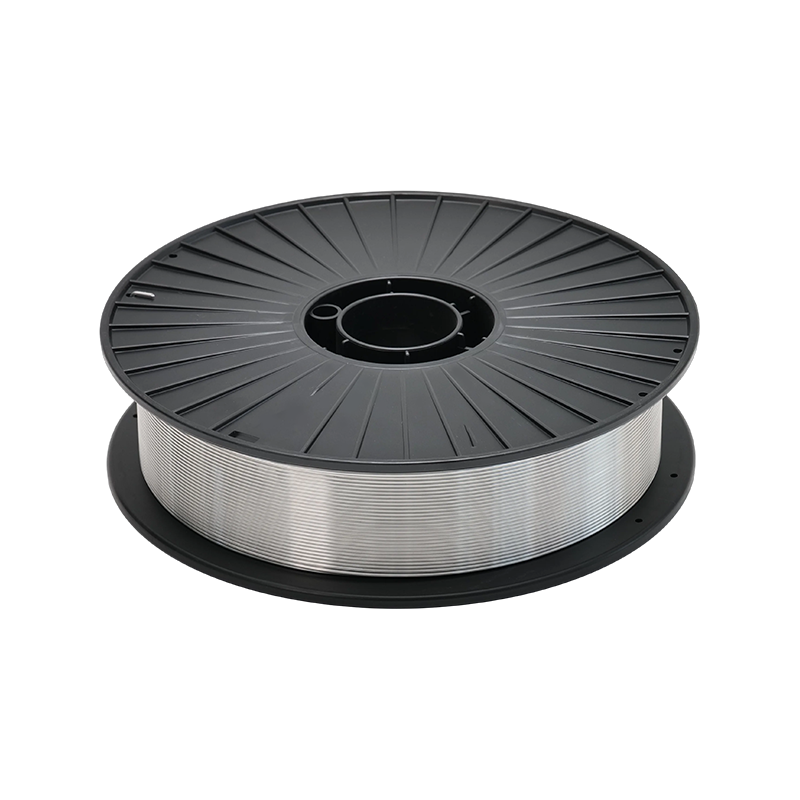
1090 aluminum wire is a commercially pure aluminum wire with a minimum aluminum content of 99.90%, placing it among the highest-purity grades in the 1xxx series. The designation follows the Aluminum Association's alloy numbering system: the first digit "1" indicates unalloyed aluminum, the second digit "0" indicates no special control over individual impurities, and the last two digits "90" specify the minimum purity level — in this case 99.90% Al.
At 99.90% purity, 1090 sits above the more common 1050 (99.50%) and 1060 (99.60%) grades, and below 1099 (99.99%) and 1199 (99.99%+) ultra-high-purity grades used in specialty semiconductor and optical applications. This positioning makes 1090 a practical choice for applications that require high conductivity and chemical purity but do not demand the cost premium of 4N or 5N ultra-pure aluminum.
The low alloying content in 1090 aluminum wire means its properties are governed almost entirely by the aluminum matrix — yielding excellent electrical conductivity (typically 61% IACS or higher), high thermal conductivity, strong corrosion resistance, and very good formability, at the cost of lower mechanical strength compared to alloy grades such as 6061 or 6201.
Chemical Composition and Key Physical Properties
The composition limits for 1090 aluminum wire are tightly constrained to protect its purity and functional consistency. Per ASTM and AA standards, the total impurity allowance is no more than 0.10%, distributed primarily among iron (Fe), silicon (Si), copper (Cu), and trace elements.
| Element | Max. Limit (wt%) |
|---|---|
| Aluminum (Al) | 99.90% min. |
| Silicon (Si) | 0.070 |
| Iron (Fe) | 0.070 |
| Copper (Cu) | 0.005 |
| Manganese (Mn) | 0.010 |
| Magnesium (Mg) | 0.010 |
| Zinc (Zn) | 0.010 |
| Others (each) | 0.005 |
Key physical and mechanical properties of 1090 aluminum wire in annealed (O temper) condition:
- Electrical conductivity: ≥61% IACS (International Annealed Copper Standard)
- Resistivity: approximately 0.0282 µΩ·m at 20°C
- Tensile strength (annealed): ~55–75 MPa
- Elongation: 20–25% (O temper); reduced in drawn/hard tempers
- Density: 2.70 g/cm³
- Melting range: 646–657°C
- Thermal conductivity: ~230 W/m·K
The low iron and silicon content relative to 1050 or 1060 grades is significant: both Fe and Si form second-phase particles (Al₃Fe, Al-Si eutectic) that scatter electrons and reduce conductivity. Keeping these impurities below 0.070% each allows 1090 to reliably achieve conductivity levels that approach the theoretical maximum for pure aluminum.
Primary Applications of 1090 Aluminum Wire
The combination of high purity, reliable electrical conductivity, and excellent drawability makes 1090 aluminum wire well-suited for a specific range of demanding applications where lower-purity grades introduce unacceptable variability.
Electrical and Electronic Bonding Wire
One of the most technically exacting uses of 1090 aluminum wire is as bonding wire in semiconductor packages. Aluminum bonding wire — typically drawn to diameters between 17 µm and 500 µm — connects die pads to lead frame contacts inside IC packages. The purity of 1090 ensures consistent loop formation, predictable bond strength, and minimized intermetallic formation at the Al-Si bond interface. Higher impurity levels would introduce variability in wire hardness and reduce the consistency of thermosonic or ultrasonic bonding processes.
Transformer and Motor Winding Wire
In power transformers, distribution transformers, and certain motor windings, 1090 aluminum magnet wire is used as a cost-effective alternative to copper winding wire. At equivalent cross-sectional area, aluminum has approximately 60% the conductivity of copper — but at roughly one-third the weight and significantly lower cost per unit conductivity. For high-efficiency transformer designs operating under continuous load, the purity advantage of 1090 over 1060 or 1050 translates into measurable reductions in I²R losses at rated current.
Overhead Transmission and Distribution Conductors
While most overhead transmission conductors use 1350 aluminum (a conductivity-optimized 1xxx grade), 1090 is specified in certain regional or utility standards where elevated purity verification is required. It is also used in fine-strand aerial bundled cable (ABC) applications where conductor flexibility and conductivity must be balanced against installation handling requirements.
Electrochemical and Cathodic Protection Anodes
High-purity aluminum anodes are used in cathodic protection systems for marine structures, pipelines, and offshore platforms. Purity directly affects anode efficiency and current capacity: impurities such as Fe and Cu promote passivation of the aluminum surface, reducing the anode's ability to deliver protective current consistently. 1090 grade wire and rod are therefore sometimes specified for anode fabrication when tighter electrochemical performance tolerances are required.
Thermal Spray and Additive Manufacturing Feedstock
In arc spray and flame spray processes, aluminum wire serves as a feedstock material that is melted and propelled onto a substrate to form protective or functional coatings. 1090 aluminum wire feedstock is used where coating purity affects downstream properties — for example, in electromagnetic shielding coatings, decorative finishes requiring anodizing, or corrosion-barrier coatings on steel structures where Fe contamination from the wire could compromise coating integrity.
1090 vs. Adjacent Aluminum Wire Grades: When Purity Matters
Selecting the correct purity grade involves balancing conductivity targets, mechanical requirements, cost, and downstream processing needs. The following comparison positions 1090 within the practical range of commercially available high-purity aluminum wire grades.
- 1050 / 1060 (99.50–99.60% Al) — adequate for general-purpose electrical conductors, foil, and extrusion; lower cost but higher impurity scatter in conductivity-critical applications
- 1070 (99.70% Al) — a common intermediate step used in capacitor foil and some winding wire; improved conductivity over 1050/1060 but still contains more Fe/Si than 1090
- 1090 (99.90% Al) — the practical engineering optimum for applications requiring confirmed high conductivity and process repeatability without the cost of 4N material
- 1199 / 4N+ (≥99.99% Al) — ultra-high-purity for semiconductor contact metallization, optical coatings, and research applications; typically 3–5× the unit cost of 1090
For most bonding wire and transformer winding applications, 1090 represents the inflection point where additional purity investment yields diminishing returns in real-world electrical performance. Engineering teams specifying a grade above 1090 should verify that the application's tolerance system can actually detect and utilize the incremental conductivity gain (typically less than 0.5% IACS between 1090 and 1099).
Temper Designations and Their Effect on Wire Performance
1090 aluminum wire is available in multiple temper conditions that alter its mechanical properties through work hardening or annealing. The temper designation is critical for matching the wire to its forming, handling, and end-use requirements.
- O (Annealed) — fully softened; highest ductility and elongation; lowest tensile strength (~55–75 MPa); preferred for fine drawing, deep forming, and bonding wire applications where loop formation and plasticity are critical
- H12 / H14 (Strain hardened, quarter/half hard) — moderate increases in tensile strength (85–115 MPa range) with reduced elongation; used where the wire must resist deformation during installation or winding without requiring full annealing
- H19 (Full hard, heavily drawn) — maximum strength achievable through cold drawing (up to ~165 MPa); used in overhead conductor applications where sag resistance under mechanical load is the primary design constraint
Unlike alloy-based aluminum grades, 1090 cannot be strengthened by precipitation hardening — it is not heat-treatable in the traditional sense. All strength increments must come from cold work (strain hardening), which simultaneously reduces conductivity slightly due to lattice distortion. For conductivity-critical designs, annealed or lightly drawn tempers are preferred.
Sourcing and Quality Verification for 1090 Aluminum Wire
Purity claims for high-purity aluminum wire require rigorous third-party verification. When qualifying a 1090 aluminum wire supplier, procurement and quality teams should confirm the following:
- Mill certification (Certificate of Analysis / CoA) — should specify heat number, chemical composition by ICP-OES or glow discharge mass spectrometry (GDMS) for ultra-low impurity verification, and mechanical test results per lot
- Conductivity testing — IACS conductivity should be verified by eddy current or four-point resistance measurement on representative wire samples from each production lot
- Dimensional tolerance — diameter tolerance (typically ±1–2% for fine wire) and roundness should be confirmed against ASTM B230, B233, or equivalent standard
- Surface quality — absence of surface cracks, seams, or drawing lubricant residue is critical for bonding wire and thermal spray feedstock; request SEM or optical micrograph evidence of surface condition for critical applications
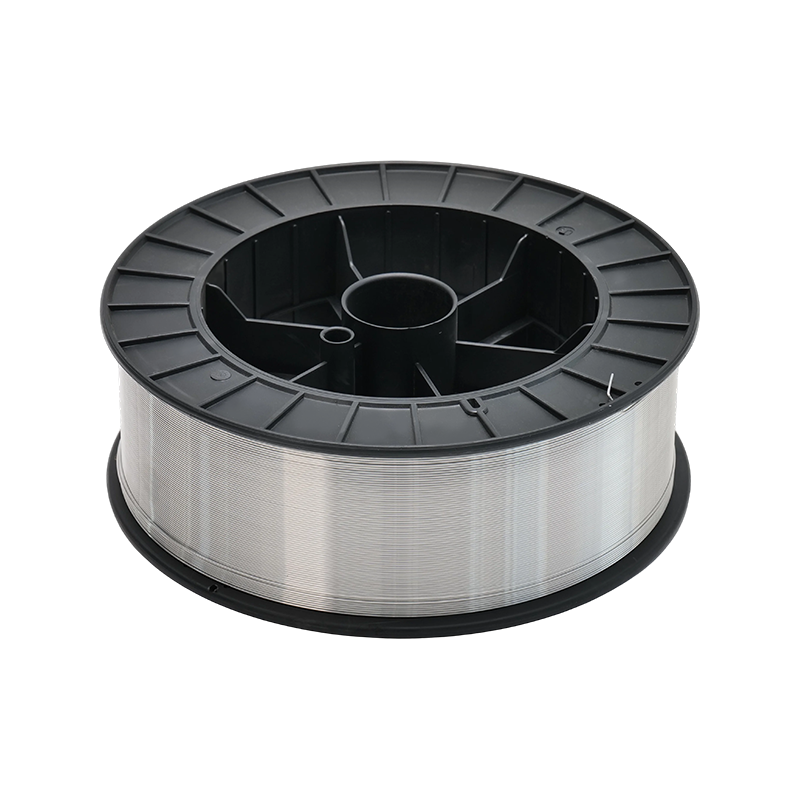
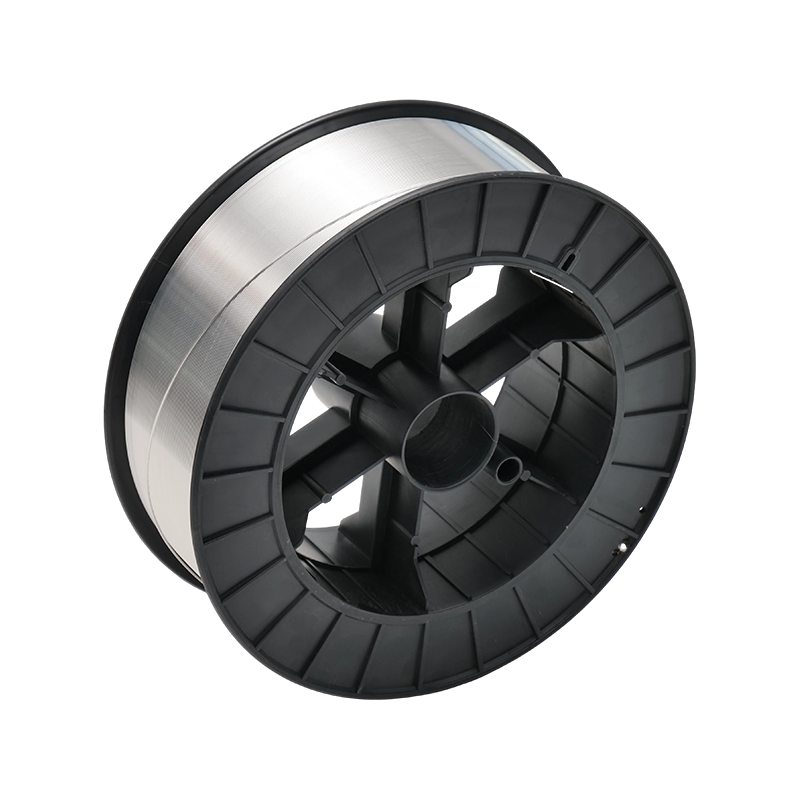
- Spooling and packaging — contamination from spool materials or inter-layer contact is a real risk in fine wire; verify packaging material compatibility and inert gas or moisture-protective packaging for high-purity grades
For applications governed by IPC, MIL-SPEC, or utility standards, confirm that the supplier's 1090 wire is produced under a documented quality management system (ISO 9001 or IATF 16949) and that traceability from ingot heat to finished wire spool is maintained throughout the production chain.