

 English
 中文简体
中文简体 русский
 Deutsch
Content
Aluminum Wire vs Copper Wire
Copper conducts electricity better than aluminum on a size-for-size basis — roughly 61% better by cross-sectional area — but aluminum weighs about one-third as much and typically costs less per pound of conductor. This trade-off is why aluminum wire dominates applications where weight and cost matter more than minimizing conductor size, such as overhead power transmission lines, while copper remains standard in tighter spaces like residential branch wiring, where a smaller gauge carrying the same current matters more.
| Property | Aluminum Wire | Copper Wire |
|---|---|---|
| Conductivity (relative) | ~61% of copper by cross-section | Reference standard (100%) |
| Weight | About 1/3 the weight of copper at equal conductivity | Heavier per unit of conductivity |
| Cost | Generally lower per pound | Generally higher per pound |
| Typical use | Overhead transmission lines, large-gauge applications | Residential wiring, motors, tight-space electronics |
Key property differences between aluminum and copper wire.
What Is Soft Aluminum Wire
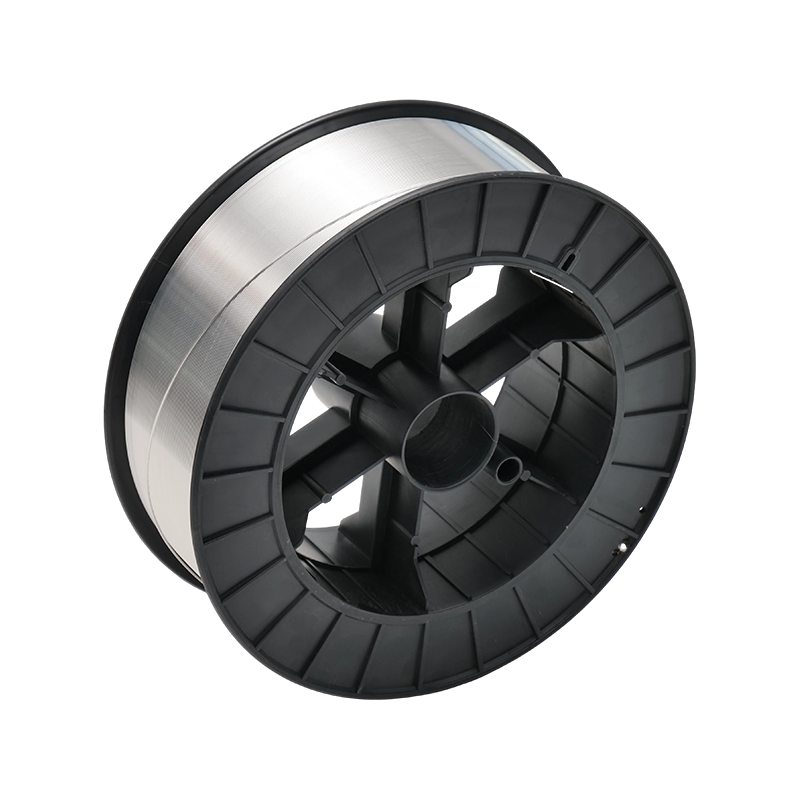
Soft aluminum wire, also called annealed aluminum wire, is aluminum wire that has been heat-treated after drawing to relieve internal stress and restore ductility. During the wire drawing process, aluminum work-hardens as it's pulled through progressively smaller dies, becoming stiffer and less flexible with each pass. Annealing reverses that hardening by heating the wire to a controlled temperature — typically 300-400°C for aluminum — which allows the metal's grain structure to recrystallize into a softer, more workable state.
The result is wire that bends, twists, and forms easily without cracking, at the cost of somewhat lower tensile strength compared to hard-drawn wire that skips the annealing step.
Annealed vs Hard Drawn Aluminum Wire
| Factor | Annealed (Soft) Wire | Hard Drawn Wire |
|---|---|---|
| Flexibility | High, bends and forms easily | Low, stiff and springy |
| Tensile strength | Lower | Higher, retains work-hardening |
| Typical application | Winding, braiding, connectors, flexible cabling | Overhead lines, applications needing self-support and sag resistance |
Annealed and hard drawn aluminum wire compared for mechanical properties and use.
Aluminum Wire Manufacturing Process
Aluminum wire production generally follows these stages:
- Molten aluminum is cast into rod form, typically through continuous casting, producing large-diameter rod coils as the starting stock.
- The rod is drawn through a series of progressively smaller dies, reducing diameter in stages until it reaches the target wire gauge; this work-hardens the metal as it thins.
- For soft/annealed wire, the drawn wire passes through an annealing furnace or continuous annealing line, heating it to relieve internal stress and restore flexibility.
- Wire intended for stranded or braided cable is twisted together in a stranding machine to form multi-wire conductors of the required construction.
- Finished wire or cable is spooled and, if required, coated or insulated before packaging for shipment.
Aluminum Wire Properties
- Light weight — roughly one-third the density of copper, reducing structural load on supporting infrastructure like transmission towers.
- Corrosion resistance — aluminum naturally forms a thin oxide layer that protects against further corrosion, though this layer can also interfere with electrical connections if not properly treated at terminations.
- Thermal expansion — aluminum expands and contracts more than copper with temperature changes, a factor engineers account for in long-span overhead line design.
- Ductility (in annealed form) — soft aluminum wire can be bent and shaped repeatedly without fracturing, making it suitable for winding and forming applications.
- Cost stability — aluminum is generally more abundant and less price-volatile than copper, which is a factor in large-scale procurement decisions.
Soft Aluminum Wire Uses and Applications
Soft (annealed) aluminum wire's flexibility makes it well suited to applications that involve bending, winding, or forming during installation or manufacturing:
- Electrical connectors and terminations — where the wire needs to be shaped around lugs or connection points without cracking.
- Winding applications — transformer coils, motor windings, and similar uses where the wire is wound tightly around a core.
- Flexible and braided cable — stranded conductors that need to bend repeatedly during installation or in service, such as in appliance cords or flexible conduit runs.
- Bonding and grounding wire — applications where the wire is routed around obstacles and needs to conform to irregular paths.
- General electrical applications — building wiring, appliance manufacturing, and industrial control panels where flexibility during installation reduces labor time.
Aluminum Wire Gauge Chart
| AWG Size | Diameter (mm) | Typical Use |
|---|---|---|
| 6 AWG | 4.11 mm | Residential service entrance, sub-panels |
| 10 AWG | 2.59 mm | Branch circuits, larger appliances |
| 14 AWG | 1.63 mm | Light-duty wiring, control circuits |
| 18 AWG | 1.02 mm | Low-voltage signal and control wiring |
Common AWG wire gauges with approximate diameter and typical application.
Because aluminum's conductivity is lower than copper's, aluminum wire is generally sized one or two gauge numbers larger than a copper wire would need to be for the same current-carrying capacity — a key spec difference to account for when substituting aluminum in a design originally sized for copper.